Tel Aviv Travel Guide for First-Time Visitors
Plan your first Tel Aviv trip with practical advice on where to stay, getting around, food, beaches, Jaffa, safety, Shabbat, costs, and a simple itinerary.
Tel Aviv is one of the easiest cities in the Middle East to enjoy quickly, but it is also one of the easiest to misread. First-time visitors often imagine a simple beach city with nightlife on top. That is partly true, but the better Tel Aviv trip is built around area choice, beach rhythm, food timing, and knowing when to use Jaffa, Neve Tzedek, Carmel Market, and the White City as anchors instead of trying to "do Tel Aviv" as one flat downtown.
For most first-timers, Tel Aviv works best as a **3-day city break** or the urban half of a longer Israel trip. It is good for beaches, cafes, markets, design, Bauhaus architecture, casual food, nightlife, and a warm city that rewards wandering. It is less ideal if you want low prices, quiet resort polish, or a trip where every logistical detail feels frictionless. Tel Aviv is relaxed socially, but not always cheap, not always quiet, and not always obvious.
**Quick answer:** First-time visitors should usually stay near the beachfront for convenience, Neve Tzedek for charm and walkability, Lev HaIr/White City for cafes and central movement, Jaffa for atmosphere, or Florentin if nightlife and street art matter more than polish. Plan around beach mornings or sunsets, use walking plus taxis and buses for most movement, try the Carmel Market area early, and do not overpack sightseeing in the heat.
Quick Facts
Table of Contents
- 1.Is Tel Aviv worth visiting for first-time travelers?
- 2.Best time to visit Tel Aviv
- 3.Where to stay in Tel Aviv
- 4.Getting around Tel Aviv without making it harder than it is
- 5.Food, markets, and how to eat well in Tel Aviv
- 6.Best things to do on a first visit
- 7.A simple 3-day Tel Aviv itinerary
- 8.Safety, costs, Shabbat, and practical tips
- 9.How to plan Tel Aviv with Jerusalem or the rest of Israel
Quick facts for first-time visitors
- **Best for:** beaches, food, cafes, nightlife, markets, design, Bauhaus streets, urban Israel trips, warm-weather city breaks - **Less ideal for:** bargain trips, quiet resort escapes, travelers who dislike heat, anyone expecting old-city sightseeing on the scale of Jerusalem - **Best trip length:** 3 full days for Tel Aviv itself; 4 days if you want slower beach time, Jaffa, museums, and a day trip - **Best areas to stay:** Beachfront/Promenade, Neve Tzedek, Lev HaIr/White City, Jaffa, Florentin, Old North - **Getting around:** walk short central routes, use buses and the light rail where useful, take taxis or ride-hailing at night, and avoid renting a car for Tel Aviv itself - **Best time to visit:** March to May and October to early November for the best mix of warmth and comfort; summer is beach-ready but hot, humid, and expensive - **Food reality:** the best eating is casual and neighbourhood-based; markets, bakeries, hummus, sabich, seafood, cafes, and modern Israeli restaurants matter more than formal checklist dining - **First-timer mistake:** staying only because a hotel says "near the beach" without checking whether the area also works for food, evening walks, and the places you actually want to reach
Table of contents
1. Is Tel Aviv worth visiting for first-time travelers? 2. Best time to visit Tel Aviv 3. Where to stay in Tel Aviv 4. Getting around Tel Aviv without making it harder than it is 5. Food, markets, and how to eat well in Tel Aviv 6. Best things to do on a first visit 7. A simple 3-day Tel Aviv itinerary 8. Safety, costs, Shabbat, and practical tips 9. How to plan Tel Aviv with Jerusalem or the rest of Israel
Is Tel Aviv worth visiting for first-time travelers?
Yes - Tel Aviv is worth visiting for first-time travelers who want beaches, food, nightlife, modern Israeli culture, markets, and a city that feels energetic without needing a museum plan every hour. It is especially strong if you like walking between neighborhoods, stopping for coffee often, and letting meals shape the day.
Tel Aviv is not the best fit for every Israel trip. If your priority is religious history, ancient sites, and dense landmark sightseeing, Jerusalem should probably get more of your time. Tel Aviv is newer, looser, more expensive, and more lifestyle-driven. Its strengths are not "stand here and look at this famous thing" as much as beach mornings, Carmel Market lunches, Bauhaus streets, Jaffa evenings, and late dinners that start when some cities are already emotionally preparing for bed.
That makes Tel Aviv easy to enjoy but hard to schedule like a classic European capital. A good first visit needs fewer boxes and better sequencing. Do the beach when the light and heat are right. Visit Jaffa when you have time to wander, not when you are racing to tick it off. Treat Carmel Market as a food-and-street-life stop, not a clean shopping mall with better spices. Use Neve Tzedek and Lev HaIr as places to stay, eat, and decompress between busier moments.
The main drawback is cost. Hotels, restaurants, cocktails, and beach-adjacent convenience can be expensive. Tel Aviv can also feel intense in summer because heat, humidity, beach crowds, scooters, construction, traffic, and nightlife all seem to have a meeting and invite your nervous system. Still, if you plan around areas instead of attractions, it is one of the most rewarding first stops in the region.
> **Quick answer block:** Tel Aviv is best for first-time visitors who want beach time, markets, food, cafes, nightlife, and a modern Israeli city base. It is weaker for travelers chasing low prices, quiet resort polish, or a sightseeing-heavy old-city trip.
Best time to visit Tel Aviv
The best time to visit Tel Aviv is usually **March to May** or **October to early November**. These windows give you warm weather, better walking conditions, useful beach time, and fewer heat-management problems than deep summer.
Summer is the obvious beach season, but it is not automatically the best first-timer season. June through September can be hot, humid, busy, and pricey. If your main goal is swimming, nightlife, and a high-energy beach city, summer works. If you want Jaffa walks, market grazing, architecture, and comfortable wandering, shoulder season is easier.
Winter is underrated for cost and local life, but it is not a guaranteed beach trip. December through February can be mild, rainy, sunny, windy, or all of those by lunch. It can work well if you care more about food, cafes, museums, and using Tel Aviv as part of an Israel itinerary, but do not sell yourself a fantasy beach holiday and then act personally betrayed by weather. Weather has never read your spreadsheet.
Jewish holidays can affect prices, transport, opening hours, and city rhythm. Shabbat also matters every week: from Friday afternoon into Saturday, some businesses close, public transport is limited, and the city changes pace. Tel Aviv stays more active than many places in Israel, especially around beaches, restaurants, and nightlife, but you still need to plan airport transfers, intercity movement, and essential errands with Shabbat in mind.
If this is your first Tel Aviv trip and your dates are flexible, choose April, May, October, or early November. If summer is your only option, build around early starts, beach breaks, shade, taxis when needed, and late dinners.
Where to stay in Tel Aviv
Where you stay in Tel Aviv matters because the city is long, beach-facing, and more neighbourhood-driven than it first appears. A hotel can be "central" and still be awkward for your actual trip if it strands you between a hot road, a weak evening area, and a beach you do not love.
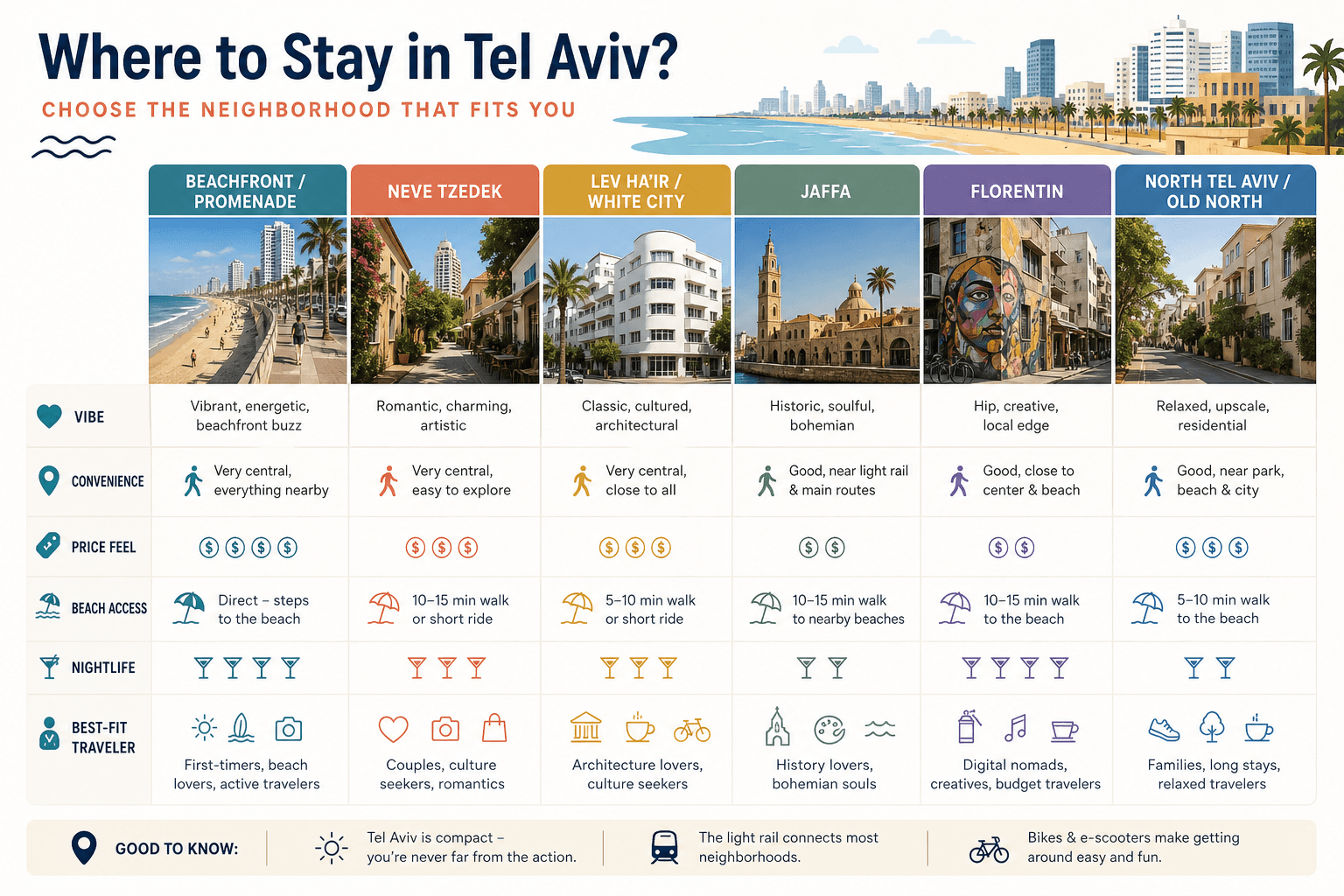
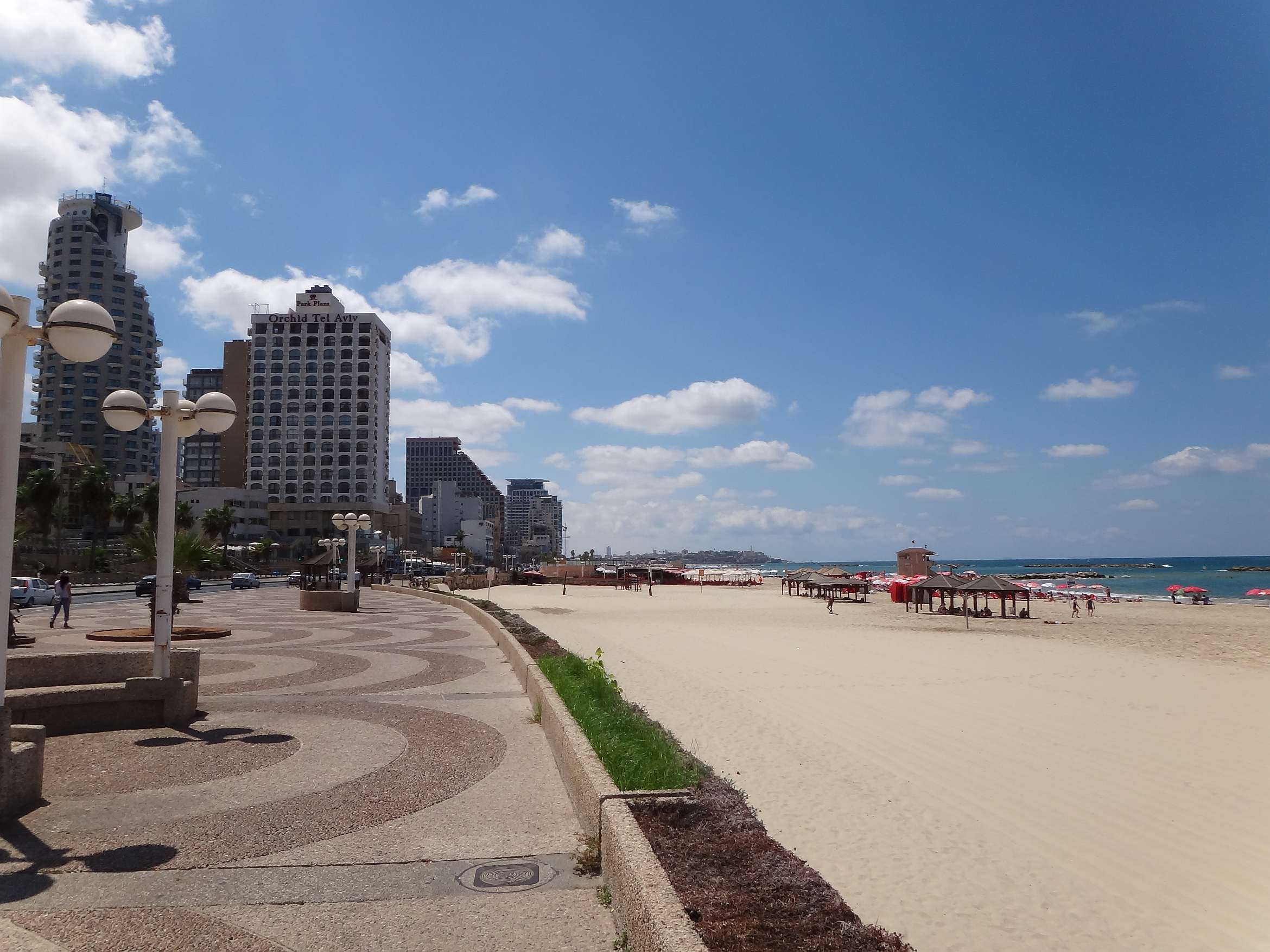
Beachfront and the Promenade
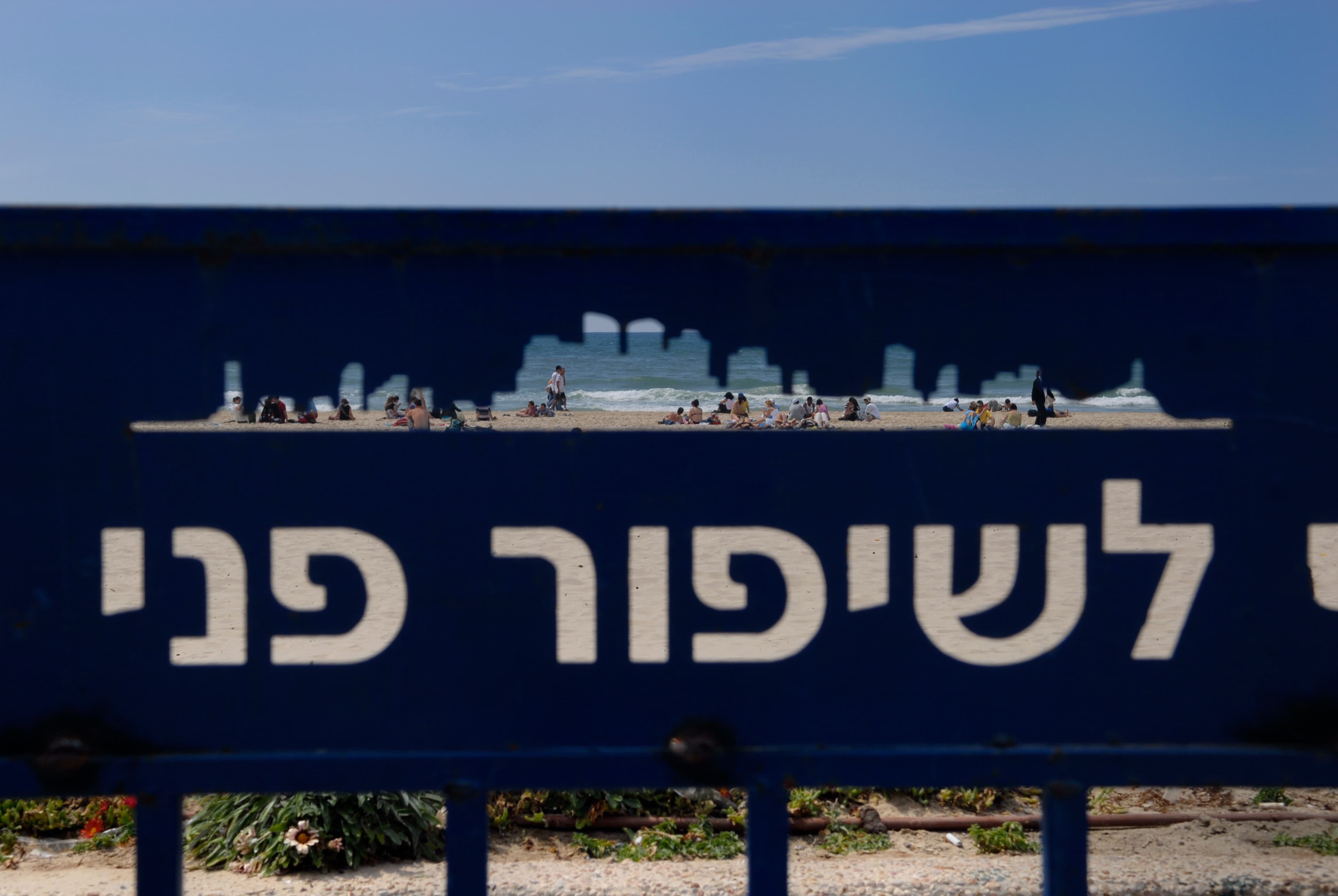
The beachfront is the easiest base for many first-timers. You get sea views, swimming access, sunset walks, and a simple mental map: beach on one side, city behind you. It is especially useful for short stays, summer trips, families, and travelers who know they will start or end each day by the water.
The tradeoff is value. Beachfront hotels can be expensive, and not every beach-adjacent block has great food or atmosphere immediately behind it. Check the exact stretch. Staying near Gordon, Frishman, Bograshov, or Banana Beach gives different evening feels than staying farther north or south.
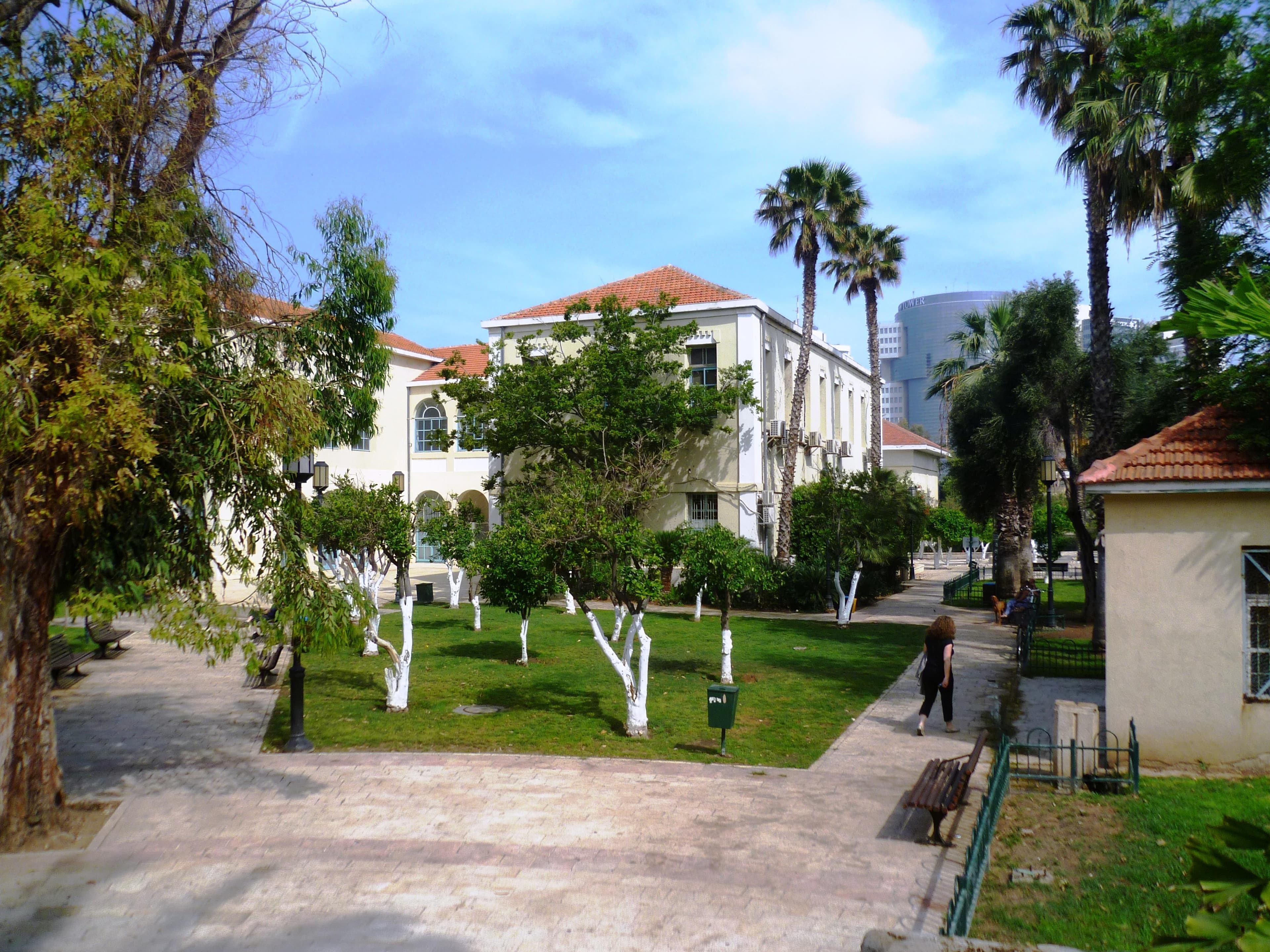
Neve Tzedek
Neve Tzedek is one of the best first-time choices if you want charm, walkability, cafes, boutiques, and easy access to the beach, Carmel Market, Rothschild Boulevard, and Jaffa. It feels more intimate than the beachfront and more polished than Florentin.
The downside is price and limited hotel inventory. It can be lovely, but it is not a secret village. Stay here if you want a softer, design-forward base and are willing to pay for it.
Lev HaIr, Rothschild, and the White City
Lev HaIr and the White City area suit travelers who care about cafes, Bauhaus architecture, restaurants, bars, and central city movement. Rothschild Boulevard is a useful orientation spine, and the surrounding streets put you close to dining, nightlife, and several walkable areas.
This is a good base if you want Tel Aviv to feel like a lived-in city rather than only a beach strip. The beach is still reachable, but not always something you pop down to in five minutes in flip-flops.
Jaffa
Jaffa is atmospheric, historic, and visually different from central Tel Aviv. It works well for travelers who want old stone streets, the port, flea-market energy, sea views, and a slower evening mood.
The tradeoff is distance from some central Tel Aviv nightlife and beaches. Jaffa can be a beautiful stay, but choose it intentionally. It is better for atmosphere than for maximum first-trip convenience.
Florentin
Florentin is best for nightlife, street art, casual food, and a younger, less polished feel. It can be fun, but it is not the safest default recommendation for every first-timer. Some blocks feel rougher, louder, or less hotel-friendly than Neve Tzedek or Lev HaIr.
Stay here if you want bars, edge, and price relief. Skip it if you want quiet, easy beach access, or a romantic first visit where the street outside your hotel does not look like it finished a shift at 4 a.m.
Old North and North Tel Aviv
The Old North can work well for returning visitors, families, quieter beach access, Hayarkon Park, and a more residential base. It is less obvious for a short first visit because Jaffa, Carmel Market, and southern nightlife are farther away.
For a first trip, choose the north if you value calm and specific hotel quality over being in the middle of everything.
> **Quick answer block:** Stay beachfront for convenience, Neve Tzedek for charm, Lev HaIr/White City for central cafes and nightlife, Jaffa for atmosphere, Florentin for bars and edge, and Old North for a quieter residential feel.
Getting around Tel Aviv without making it harder than it is
Tel Aviv is not a city where visitors need a rental car. In fact, renting a car for Tel Aviv itself is usually a punishment with cupholders. Traffic, parking, narrow streets, scooters, and one-way systems make it more trouble than it is worth.
For short central trips, walking is often best. Beachfront to Neve Tzedek, Carmel Market to Rothschild, and Jaffa to the southern promenade can all work on foot if the weather is reasonable. In summer heat, "reasonable" becomes a moving target, so be less heroic and more hydrated.
Buses are useful, especially if you are comfortable using local transit apps. The light rail has made some east-west and south-central movement easier, but it does not replace every tourist route. It is most useful when your hotel, station, and destination line up cleanly.
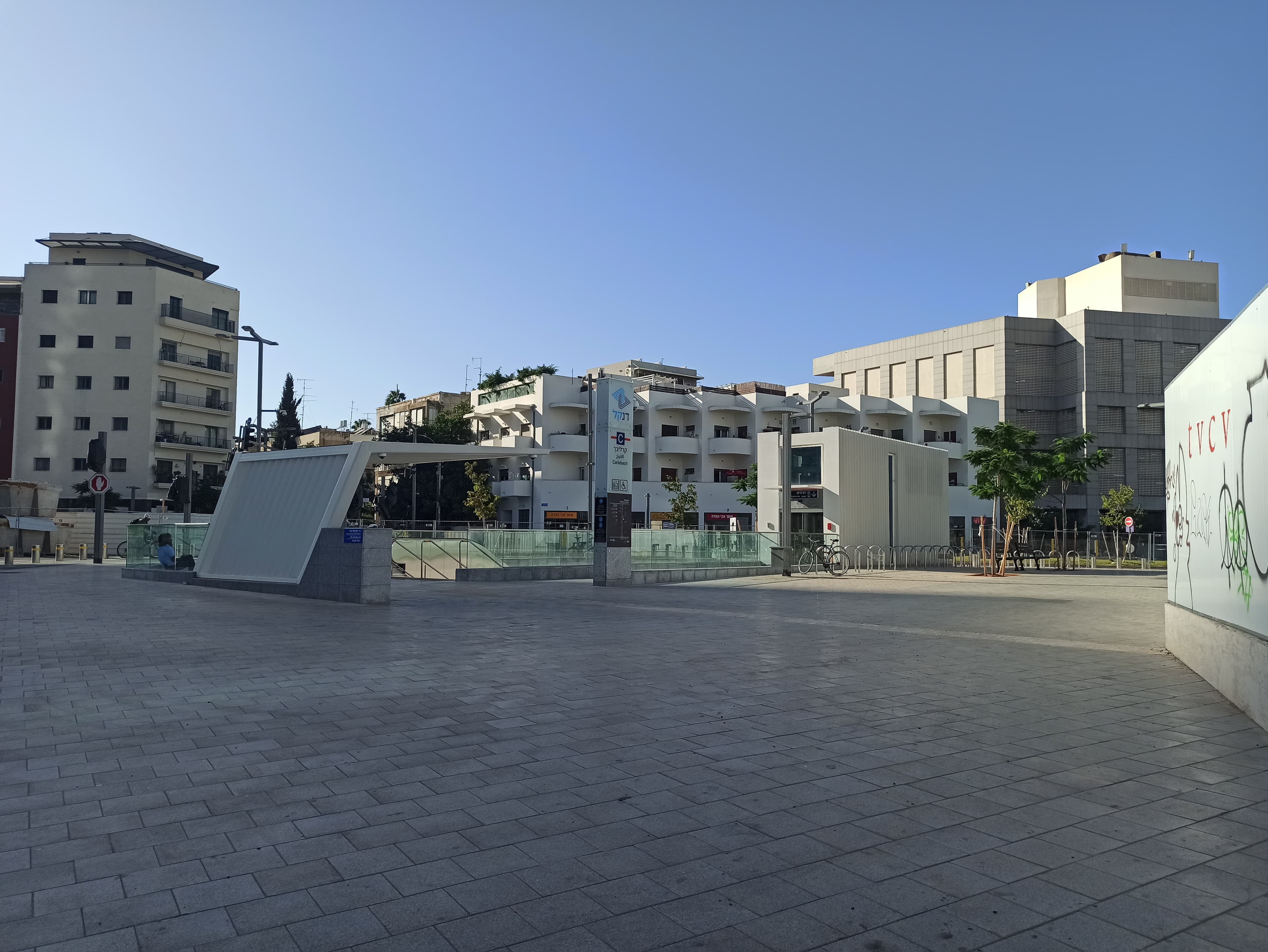
Taxis and ride-hailing are practical at night, for airport movement, or when crossing awkward distances. Prices can add up, but so can wasting 45 minutes and a litre of sweat to prove you are a transit purist. The correct travel mode is the one that preserves the day.
Scooters and bikes are everywhere, but they are not for everyone. If you are not comfortable with fast urban movement, changing bike lanes, and local traffic habits, do not make your first Tel Aviv morning the audition. Use the promenade and parks first if you want an easier ride.
For the airport, train plus taxi can work depending on your arrival time and luggage, but many first-timers use a taxi or prearranged transfer for simplicity. Check Shabbat and holiday timing carefully. Limited public transport during Shabbat can turn a normal transfer into a logistical little opera.
Food, markets, and how to eat well in Tel Aviv
Tel Aviv is one of the best food cities in the region, but the smart first-timer plan is casual and area-based. Build meals around where you already are: Carmel Market and Kerem HaTeimanim, Jaffa, Levinsky Market, Florentin, Neve Tzedek, Rothschild/Lev HaIr, and the beachfront when convenience matters.
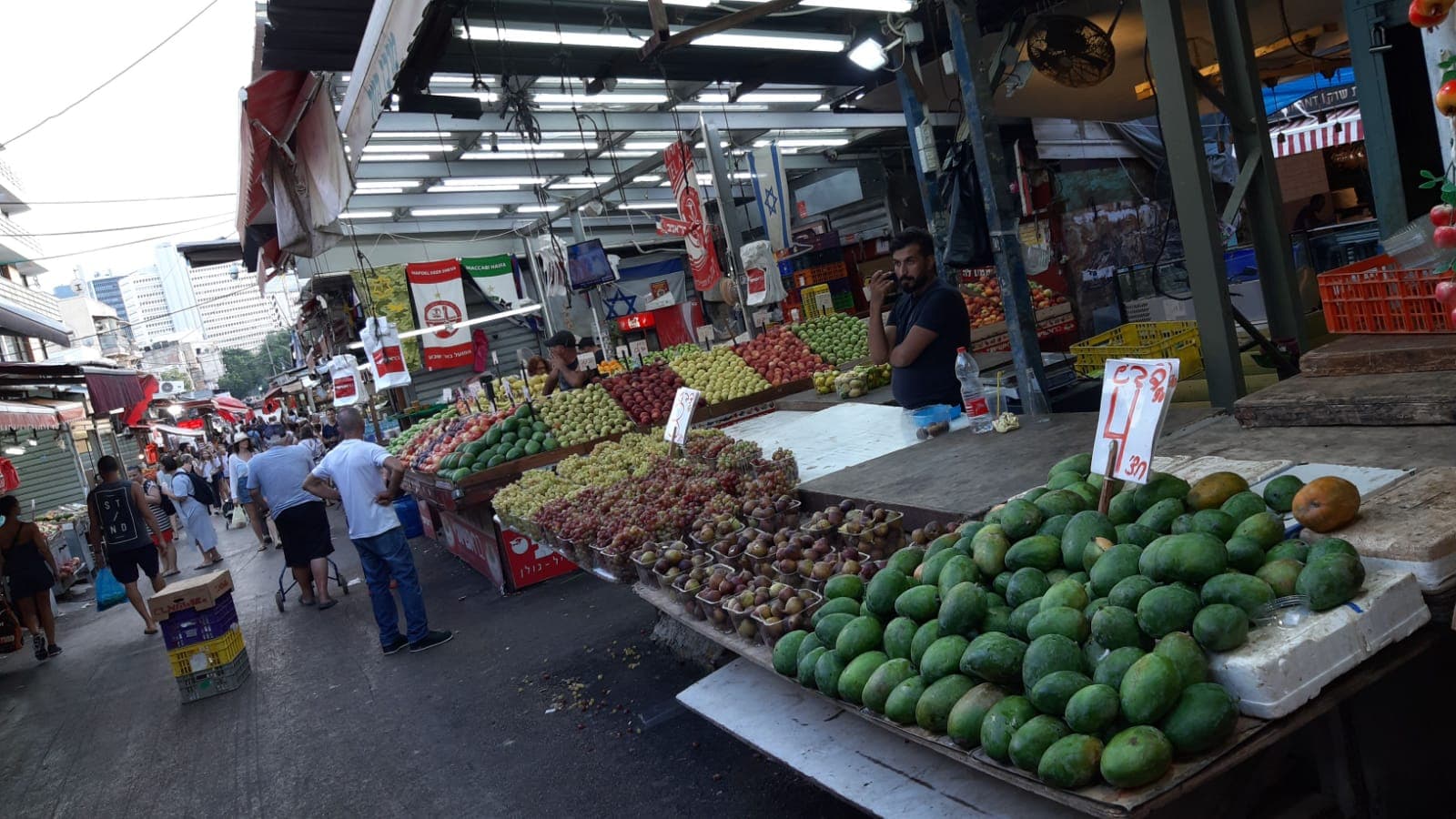
Carmel Market is the obvious first food anchor. Go earlier in the day, expect crowds, and treat it as a mix of produce, snacks, bakeries, juice stalls, casual counters, and adjacent lanes rather than one neat attraction. The market pairs well with Kerem HaTeimanim, Nahalat Binyamin, Neve Tzedek, and the beach.
Jaffa is good for hummus, seafood, bakeries, flea-market eating, and evening atmosphere. It is also where first-timers often overpay if they sit down blindly in the most obvious tourist pocket. Walk a little, check current reviews, and do not assume "old port" automatically means best meal.
Levinsky Market and Florentin are better for spice shops, casual eating, bars, and a less polished night out. This area can be excellent, but it is better when you are comfortable with a more urban, uneven feel.
For what to eat, prioritize **hummus**, **falafel**, **sabich**, **bourekas**, **shakshuka**, **Israeli breakfast**, **fresh seafood**, **market pastries**, **malabi**, and modern Israeli small plates. Tel Aviv also has excellent coffee, bakeries, vegan food, and natural-wine-type restaurants if that is your lane.
Reservations matter for popular restaurants. Casual food can be spontaneous; destination restaurants should be booked. Also remember that Friday evening and Saturday timing can change openings, while Tel Aviv still has more options than many Israeli cities. The food scene is flexible, but your exact dream restaurant may not be.
> **Quick answer block:** Eat by neighbourhood in Tel Aviv. Use Carmel Market for a first lunch, Jaffa for atmosphere and hummus/seafood, Levinsky/Florentin for casual night energy, and Lev HaIr or Neve Tzedek for cafes and restaurants between sightseeing blocks.
Best things to do on a first visit
The best things to do in Tel Aviv are not just attractions. They are area combinations: beach plus Neve Tzedek, Carmel Market plus Kerem HaTeimanim, Jaffa plus the promenade, Rothschild plus Bauhaus streets, Florentin plus Levinsky, and a proper sunset that you do not schedule like a dentist appointment.
Start with the **beach and promenade**. Even if you are not a beach person, the waterfront explains the city. Walk the promenade, choose a beach that fits your mood, swim if conditions are good, and time at least one sunset by the sea.
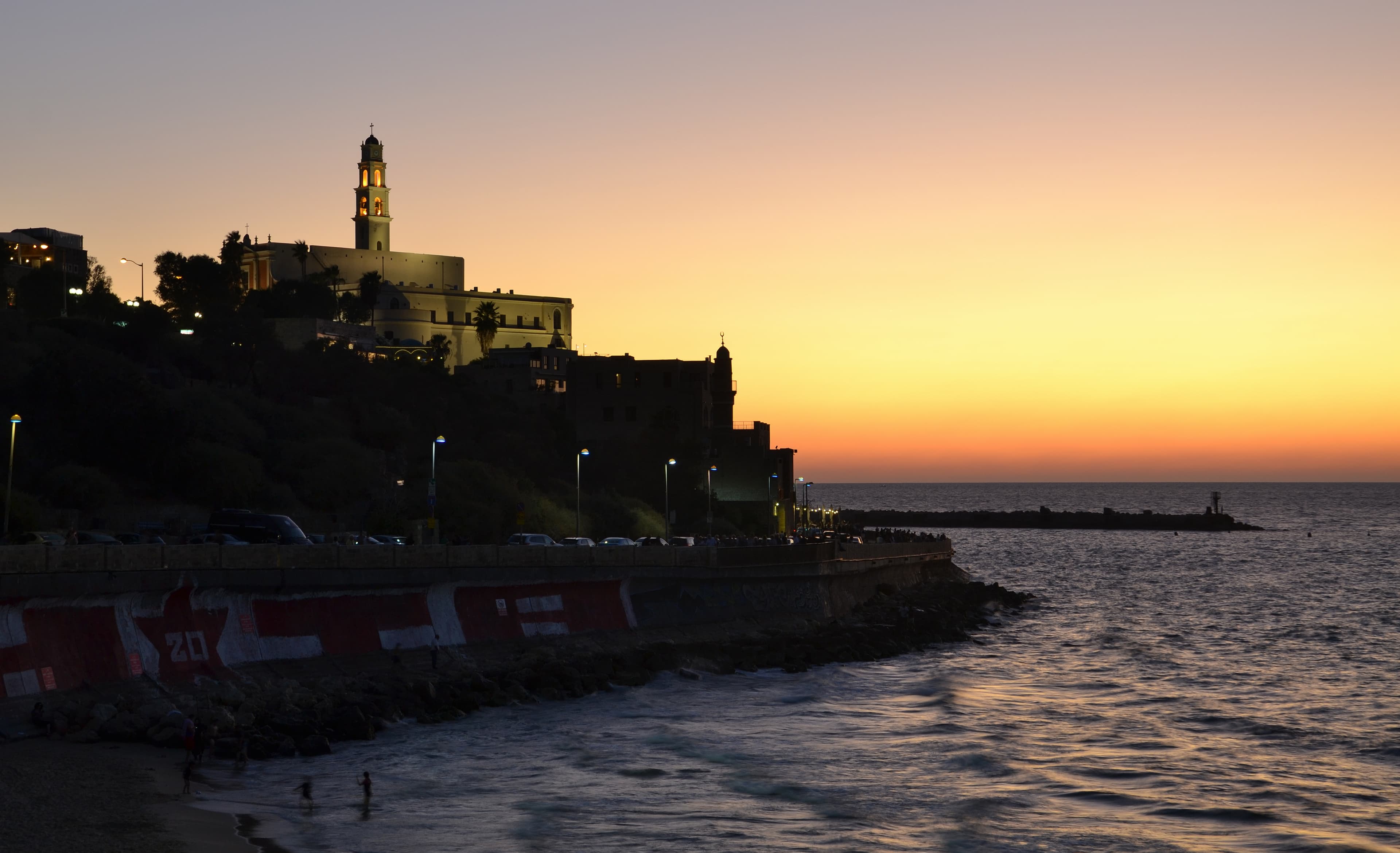
Visit **Jaffa** for the old port, flea market, stone lanes, sea views, galleries, and dinner or drinks. Jaffa is most rewarding when you give it a half day or long evening, not when you bolt down after lunch, take three photos, and sprint back north.
Spend time around **Carmel Market, Kerem HaTeimanim, and Nahalat Binyamin**. This is one of the best first-time clusters because it mixes food, street life, crafts on market days, older lanes, and easy access to both Neve Tzedek and the beach.
Walk **Rothschild Boulevard and the White City** for Tel Aviv's Bauhaus and International Style architecture. You do not need to become an architecture professor. Just use the boulevard as a shaded route and let the buildings, kiosks, cafes, and side streets show how central Tel Aviv moves.
Use **Neve Tzedek** as a calmer design-and-cafe area. It is pretty, compact, and useful as a reset between Jaffa, the beach, and central Tel Aviv.
Consider the **Tel Aviv Museum of Art** if you want a cultural anchor beyond beaches and markets. It is especially useful on hot days or when you need an indoor break that is not another restaurant.
For nightlife, choose the area that matches your energy. Florentin is younger and rougher-edged, Rothschild/Lev HaIr is central and varied, Jaffa can be more atmospheric, and the beachfront can be convenient but not always the best value. Tel Aviv nights run late. If you go out at 8 p.m. expecting peak atmosphere, you may mostly meet dinner reservations and chairs.
A simple 3-day Tel Aviv itinerary
A good 3-day Tel Aviv itinerary should keep the city loose while still giving each day a clear geography. Do not cross the city five times because a map made every dot look friendly. Tel Aviv is better when days have a base area.
Day 1: Beachfront, Neve Tzedek, and Carmel Market
Start with the beach or promenade, especially if you arrived the night before. Walk south or north depending on your hotel, get your orientation, and resist planning anything too complicated before coffee.
Late morning, head toward Carmel Market. Eat casually, browse the lanes, and connect the market with Kerem HaTeimanim or Nahalat Binyamin if the timing works. In the afternoon, move into Neve Tzedek for cafes, boutiques, and quieter streets.
End with sunset near the beach or dinner in Neve Tzedek, Lev HaIr, or the market-adjacent area. Keep the first night flexible. Tel Aviv rewards the first wander more than the first spreadsheet.
Day 2: Jaffa, promenade, and an evening out
Give Jaffa proper time. Start late morning or early afternoon if you want the flea market and shops, or aim later if dinner and evening atmosphere matter more. Walk the old lanes, port area, lookout points, and flea-market streets.
If the weather is comfortable, walk back toward Tel Aviv along the sea. This route helps first-timers understand the connection between old Jaffa and modern Tel Aviv better than any taxi ride can.
At night, choose either Jaffa for atmosphere, Florentin for bars and street art, or Lev HaIr/Rothschild for a more central dinner-and-drinks route.
Day 3: White City, museum or park, and a final beach rhythm
Use the third day for central Tel Aviv. Walk Rothschild Boulevard and nearby White City streets, stop for coffee, and add the Tel Aviv Museum of Art if you want an indoor cultural anchor.
If you prefer outdoors, use Hayarkon Park, the Old North, or another beach stretch instead. The best final Tel Aviv day often includes one useful sight, one neighbourhood meal, and one more sunset. That is not lazy. That is understanding the assignment.
If you are continuing to Jerusalem, keep the evening light and sort your transfer timing. If you are flying out, double-check airport timing and Shabbat or holiday constraints before your last dinner turns into a transportation committee meeting.
Safety, costs, Shabbat, and practical tips
Tel Aviv is generally manageable for first-time visitors, but practical awareness matters. The city is lively, urban, and beach-oriented. Watch normal city issues: pickpocketing in crowded areas, valuables on the beach, late-night judgment, traffic, scooters, and overpriced convenience.
Security in Israel can feel more visible than in many destinations. You may see bag checks, armed personnel, shelters, or security procedures. Conditions can also change quickly, so check current travel advisories and local guidance before and during the trip. Do not treat a travel guide as a substitute for live security information. That would be a very dumb hill to die on, and Tel Aviv has nicer hills nearby.
Costs are a real issue. Tel Aviv is expensive by regional standards and can surprise visitors expecting a casual beach bargain. Hotels near the beach, cocktails, taxis, and popular restaurants add up quickly. You can control costs with casual food, market meals, apartments or smaller hotels, buses when practical, and staying slightly off the beachfront.
Shabbat affects planning from Friday afternoon to Saturday evening. Tel Aviv remains relatively lively, but public transport is limited, some businesses close, and intercity movement needs planning. If you are traveling to Jerusalem, the airport, or another city around Shabbat, solve the transport question before you book the perfect dinner.
Beach basics matter. Use sunscreen, check swimming flags, watch your belongings, and do not underestimate summer humidity. Tel Aviv style is casual, but restaurants and nightlife vary; pack light clothing, comfortable walking shoes, swimwear, and one smarter outfit if you plan nicer dinners.
English is widely understood in visitor-facing areas, cards are commonly accepted, and local apps help with taxis and routing. Still, carry a little backup payment, keep your phone charged, and do not assume every small place works exactly like home.
How to plan Tel Aviv with Jerusalem or the rest of Israel
For many first-time visitors, Tel Aviv is one half of the trip, not the whole trip. A simple structure is **3 days in Tel Aviv and 2 to 3 days in Jerusalem**, with more time added for the Dead Sea, Galilee, Haifa, Akko, the Negev, or Eilat depending on interest and season.
Tel Aviv and Jerusalem are close enough to pair, but they feel completely different. Tel Aviv is beaches, markets, food, nightlife, and modern urban energy. Jerusalem is history, religion, old-city intensity, museums, viewpoints, and heavier cultural weight. Trying to understand Israel from only one of them is like reviewing a restaurant after eating the napkin.
If you are flying in or out of Ben Gurion Airport, Tel Aviv is usually the easier soft landing. It is also a good place to recover from jet lag because beach walks and casual food are more forgiving than a packed old-city itinerary.
Do Jerusalem when you have the energy for depth. Do not reduce it to a rushed day trip if history and religious sites matter to you. A day trip can work for a taste, but it is not the same as actually staying there.
For first-timers, the cleanest plan is often:
1. **Tel Aviv first:** 2 to 3 nights for beach, food, Jaffa, markets, and orientation 2. **Jerusalem next:** 2 to 3 nights for the Old City, museums, markets, and viewpoints 3. **Add-on:** Dead Sea, Galilee, Haifa/Akko, or Negev depending on season and priorities
If your trip is short, do not add too many bases. Tel Aviv is at its best when you leave room for late meals, beach time, and neighbourhood wandering. Compress it too hard and you will miss the exact thing people go there for: the rhythm.
Final advice
The best Tel Aviv travel guide is not a list of sights. It is a way to avoid fighting the city. Stay in an area that matches your trip, use the beach and market as anchors, give Jaffa enough time, respect heat and Shabbat logistics, and spend more energy choosing the right neighbourhood flow than chasing every attraction.
For first-time visitors, Tel Aviv is at its strongest when it feels half planned and half loose: beach in the morning, market at lunch, cafes in the afternoon, Jaffa or Rothschild in the evening, and enough flexibility to follow the city when it starts getting good.
Let Fare Window find the best fares for your next trip.
Track routes, watch price changes, and get smarter alerts before you book.
Start tracking faresKeep planning
Related travel guides
Explore more first-time destination guides while you compare routes, seasons, and trip shapes.