Dublin Travel Guide for First-Time Visitors
Plan your first Dublin trip with practical advice on where to stay, getting around, pubs and food, things to do, safety, timing, and a simple itinerary.
Dublin is one of the easiest European capitals to enjoy badly. That sounds unfair, but it is useful. The city is compact, friendly, literary, walkable in the centre, full of pubs, and simple enough for a first trip. It is also expensive, hotel value can be brutal, and the most obvious visitor trail can turn into Temple Bar, Guinness, one photo at Trinity, another pint, and a vague feeling that you missed the actual city.
The better first Dublin trip is **2 to 3 full days** based around short walks, one or two booked anchors, neighbourhood evenings, and a realistic understanding of weather. Stay central enough that you are not commuting into the fun, but do not assume the noisiest pub street is the best base. Dublin rewards people who group sights by area, leave room for conversation, and treat pubs as social spaces rather than a drinking obstacle course with upholstery.
**Quick answer:** First-time visitors should usually stay around St Stephen's Green, Merrion Square, Trinity/Grafton Street, Portobello, the quieter edges of Temple Bar, or Smithfield depending on budget and evening style. Use buses, Luas, DART, and walking instead of renting a car. Book Kilmainham Gaol, Guinness Storehouse, popular restaurants, and Trinity/Book of Kells experiences ahead if they matter to you. Plan one classic pub night, but do not make Temple Bar your whole personality. Dublin already has enough of that.
Quick Facts
Table of Contents
- 1.Is Dublin worth visiting for first-time travelers?
- 2.Best time to visit Dublin
- 3.Where to stay in Dublin
- 4.Getting around Dublin without renting a car
- 5.Food, pubs, and where evenings actually work
- 6.Best things to do on a first visit
- 7.A simple 3-day Dublin itinerary
- 8.Safety, money, and practical tips
- 9.How to time your Dublin trip for better value
Quick facts for first-time visitors
- **Best for:** pubs, literature, live music, Georgian streets, walkable city breaks, museums, history, friendly first trips, and easy day trips by train or tour - **Less ideal for:** bargain hotel hunters, guaranteed sunshine, beach-first trips, visitors who want huge grand boulevards, or anyone expecting London-level transit coverage - **Best trip length:** 2 full days for a quick city break; 3 full days for a better first visit; 4 days if you want a coastal DART trip or Wicklow/Glendalough day trip - **Best areas to stay:** St Stephen's Green, Merrion Square, Trinity/Grafton Street, Portobello, Smithfield, the Docklands for business/concert convenience, and the quieter edge of Temple Bar only if nightlife is the point - **Getting around:** walk the compact centre, use Luas for east-west and north-south tram hops, buses for broader coverage, DART for the coast, and airport buses or taxis from Dublin Airport - **Best time to visit:** May, June, September, and early October for the best balance; March for St Patrick's Day energy if crowds and prices are acceptable - **Food reality:** Dublin food is much better than the lazy jokes suggest, but the best meals are usually outside the most tourist-shaped pub blocks - **First-timer mistake:** overpaying to sleep in Temple Bar, then complaining that Dublin is loud and expensive. Correct diagnosis, self-inflicted wound.
Table of contents
1. Is Dublin worth visiting for first-time travelers? 2. Best time to visit Dublin 3. Where to stay in Dublin 4. Getting around Dublin without renting a car 5. Food, pubs, and where evenings actually work 6. Best things to do on a first visit 7. A simple 3-day Dublin itinerary 8. Safety, money, and practical tips 9. How to time your Dublin trip for better value
Is Dublin worth visiting for first-time travelers?
Yes, Dublin is worth visiting for first-time travelers who want a compact, social, history-heavy city with good museums, pubs, music, literary texture, and easy access to the Irish coast. It is a strong first stop in Ireland because it is logistically simple: the airport is close, English is spoken, the centre is walkable, and you can understand the city in a few days without needing a spreadsheet and a minor in urban rail theory.
Dublin is not a city of huge monuments. If you arrive expecting Paris, Rome, or Vienna levels of architectural drama, you may feel underwhelmed. Dublin's appeal is smaller-scale: Georgian squares, bridges over the Liffey, old libraries, political history, pubs with actual regulars, coastal villages on the DART, and streets where the best part is often the conversation rather than the facade.
The main tradeoff is cost. Hotels can be painfully expensive for the quality, especially around events, weekends, summer, and St Patrick's Day. Food and drinks are not cheap either. The city still works well for a short break, but value comes from picking the right base, avoiding lazy tourist traps, and not trying to fill every minute with paid attractions.
First-timers should think of Dublin as a **high-character, short-stay city** rather than a giant sightseeing machine. Two days gives you the centre and one or two major anchors. Three days lets you add Kilmainham, the coast, Phoenix Park, or a slower neighbourhood day. Four days is useful only if you are using Dublin as a base for nearby trips.
> **Quick answer block:** Dublin is best for first-time visitors who want pubs, museums, Irish history, literary culture, walkable neighbourhoods, and easy coastal add-ons. It is weaker for travelers chasing low prices, perfect weather, or a long checklist of blockbuster monuments.
Best time to visit Dublin
The best time to visit Dublin for most first-time travelers is May, June, September, or early October. These months usually offer the best balance of daylight, tolerable crowds, milder weather, and less punishing hotel demand than peak summer or major event periods.
July and August are lively and practical if that is when you can travel, but they are not automatically the best months. Hotel prices rise, popular sights book out, and the weather can still do whatever it wants because Ireland did not sign a sunshine contract. Bring a light rain layer even in summer. Optimism is nice; waterproofing is better.
March is a special case. St Patrick's Day can be fun if you want crowds, parades, pub energy, and a city that is fully awake. It is a bad fit if you want normal pricing, low-stress restaurant bookings, or quiet streets. If you visit for St Patrick's Day, book early and treat the festival as the reason for the trip, not a cute bonus.
Winter is quieter and can be better value, but daylight is short and weather can feel damp rather than dramatically cold. December has lights, shopping, pubs, and festive atmosphere, though it does not have the Christmas-market depth of Central Europe. January and February are the value months if you mainly want museums, pubs, and lower hotel pressure.
For a first Dublin trip, shoulder season is the safest recommendation. If you are combining Dublin with the west of Ireland, May, June, and September are especially strong because you get better odds for outdoor time without peak-summer madness.
Where to stay in Dublin
The best area to stay in Dublin depends on how much you care about walkability, pub noise, hotel value, and evening atmosphere. For most first-time visitors, the sweet spot is south of the Liffey near St Stephen's Green, Merrion Square, Trinity, Grafton Street, or Portobello. Smithfield is a good northside alternative for value and modern convenience.
St Stephen's Green and Grafton Street
This is the easiest first-timer base if your budget allows it. You can walk to Trinity College, the National Gallery, Merrion Square, Dublin Castle, Temple Bar, and many restaurants without being trapped directly inside the loudest nightlife zone. St Stephen's Green also gives you a practical mental map: park, shopping streets, museums, and Georgian Dublin all close together.
The downside is price. Hotels here can be expensive, and some are better located than they are comfortable. Read recent reviews carefully. In Dublin, "central" sometimes means "conveniently located above your future sleep regret."
Merrion Square and Georgian Dublin
Merrion Square, Baggot Street, and the wider Georgian area work well for travelers who want a calmer, polished base. You are close to the National Gallery, museums, government buildings, parks, and decent restaurants. It feels more elegant and less rowdy than Temple Bar.
This is a good choice for couples, older travelers, business-plus-leisure trips, and anyone who wants Dublin without the soundtrack of a stag weekend discovering volume.
Trinity and the quieter edge of Temple Bar
Trinity and the streets just outside Temple Bar are extremely convenient. You are close to the Book of Kells, the Liffey, Grafton Street, Dublin Castle, and major bus routes. The trick is staying near the action, not inside the loudest action.
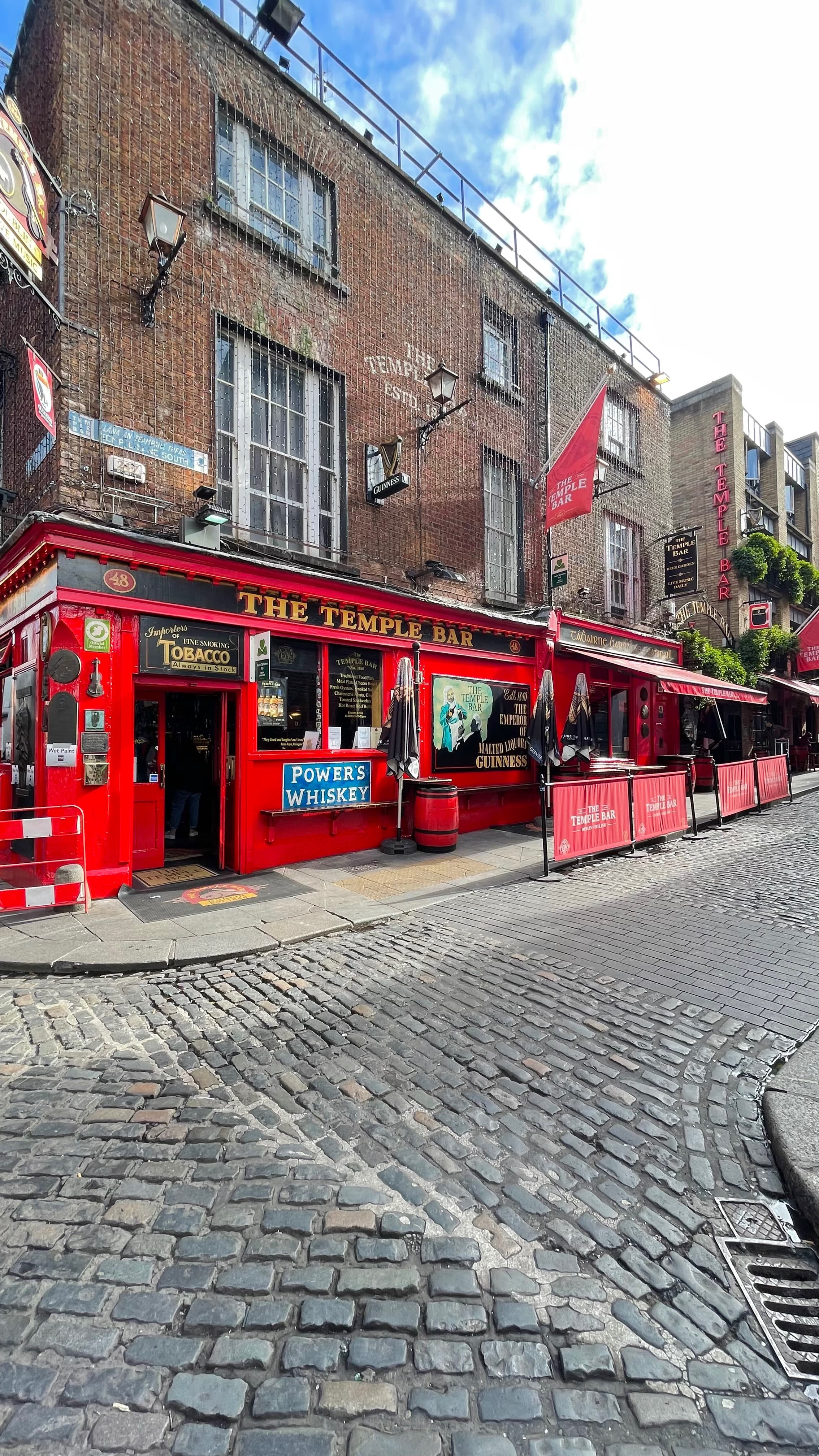
Temple Bar itself is useful for one walk-through, one drink if you want the scene, and maybe live music if you choose carefully. It is not usually the best place to sleep. Prices are high, noise is common, and plenty of venues are aimed squarely at visitors. Fun for a night, silly as a whole operating system.
Portobello and Camden Street
Portobello, Camden Street, and nearby Rathmines edges are better for travelers who want restaurants, pubs, canalside walks, and a slightly more local evening feel. You are still close enough to walk or bus into the centre, but nights feel less like a visitor funnel.
This is one of Dublin's better bases if food and casual nightlife matter more than being beside every daytime sight.
Smithfield
Smithfield is practical, improving, and often better value than the southside core. You are near the Luas Red Line, the Jameson Distillery Bow St., the Four Courts, the Liffey, and a reasonable walk or tram ride from central sights. It is not as classically pretty as Georgian Dublin, but it works.
Choose Smithfield if you want value, transport, and a less polished base. Check the exact hotel location because a few blocks can change the feel.
Docklands
The Docklands are clean, modern, and convenient for business trips, concerts, tech offices, and the Samuel Beckett Bridge area. They are less charming for a classic first Dublin visit because you are farther from the historic centre and older pub texture.
Stay here if the price is good, you have an event nearby, or you prefer modern hotels. Do not stay here expecting old Dublin on your doorstep.
> **Quick answer block:** Stay near St Stephen's Green/Grafton Street for the easiest first visit, Merrion Square for calmer elegance, Portobello/Camden for food and evenings, Smithfield for value and Luas access, and Temple Bar only if nightlife matters more than sleep.
Getting around Dublin without renting a car
Dublin is easiest without a rental car. The visitor centre is walkable, parking is annoying, traffic is slow, and a car becomes a wheeled bill with mirrors. Use walking, Luas, buses, DART, taxis, and airport buses instead.

Walking is the default for the central sights. Trinity to Dublin Castle, Grafton Street, Temple Bar, the Liffey, and Merrion Square all sit within manageable distances. The problem is not distance so much as weather and uneven pacing. Build in pub, café, or museum breaks rather than pretending every wet sidewalk is character-building.
The **Luas** tram is useful for specific corridors. The Red Line helps with Smithfield, Heuston, the Docklands, and connections across the north side. The Green Line helps with St Stephen's Green, Ranelagh, Dundrum, and southside movement. It does not cover everything, but when it works for your route, it is simple.
Buses give broader coverage but require more attention. Use live routing through Transport for Ireland or a reliable map app. For tourists staying central, buses are most useful for airport routes, Kilmainham/Phoenix Park approaches, and neighbourhoods not covered by Luas.
The **DART** is the best way to add the coast. Howth, Malahide, Dalkey, Killiney, and Dún Laoghaire can all make good half-day or day-trip options depending on weather and energy. If your Dublin trip has three or four days, one coastal DART outing is often more rewarding than squeezing in another central paid attraction.
For airport transfers, Dublin still has no airport train, which is one of those facts that makes a capital city look at its shoes. Express coaches such as Aircoach or Dublin Express are convenient for many central hotels. Regular Dublin Bus routes can be cheaper but slower and less luggage-friendly. Taxis make sense for late arrivals, groups, heavy bags, or hotels not well served by bus.
A Leap Visitor Card can be useful if you will take multiple city trips by bus, Luas, DART, or commuter rail in the Dublin zone. It does not cover every airport express service, so check the specific operator before assuming one card rules them all.
Food, pubs, and where evenings actually work
Dublin is a good food city if you do not eat every meal in the most obvious pub beside the most obvious landmark. The best plan is one classic pub session, one better modern Irish meal, one casual neighbourhood dinner, and enough flexibility for bakeries, cafés, seafood, or a market stop.
Pubs matter in Dublin, but choose them with intent. A good pub is not just a place selling Guinness; it is a room with rhythm. Some are built around music, some around conversation, some around sports, some around tourists taking photos of each other holding foam like it is a newborn child. None of these are illegal. Some are just more expensive.
Temple Bar is famous for a reason. It is central, photogenic, loud, and easy. It is also pricey and heavily tourist-facing. Go see it, but do not judge Dublin's pub culture only from those blocks. Look toward areas around Merrion/Baggot, Camden Street, Portobello, Smithfield, Stoneybatter, Phibsborough, and quieter central side streets for evenings with better odds.
For food, Dublin has strong modern Irish cooking, seafood, bakeries, casual Asian restaurants, wine bars, and pub food ranging from excellent to "the fryer was emotionally available." If you want a popular restaurant, book ahead. If you want traditional food, look for places that do a few things well rather than giant menus promising every Irish dish and three forms of regret.
Breakfast and coffee are easy around the southside core, Portobello, Stoneybatter, and the Docklands. Lunch is best planned around where you already are: near museums, Trinity, Camden Street, or the coast if you are doing a DART day. Do not cross the city for a single meal unless the meal is genuinely the point.
Guinness Storehouse is worth it for some first-timers, especially if you like brand history, beer, or city views from the Gravity Bar. It is not mandatory if you prefer smaller pubs or already know you dislike brewery-style attractions. Dublin has enough pressure to "do the Guinness thing"; you are allowed to be a person, not a checklist with shoes.
Best things to do on a first visit
The best first Dublin itinerary mixes Trinity and Georgian Dublin, the Liffey and old centre, one major history site, one pub/music evening, and either Guinness/Kilmainham/Phoenix Park or a coastal DART trip depending on your interests.
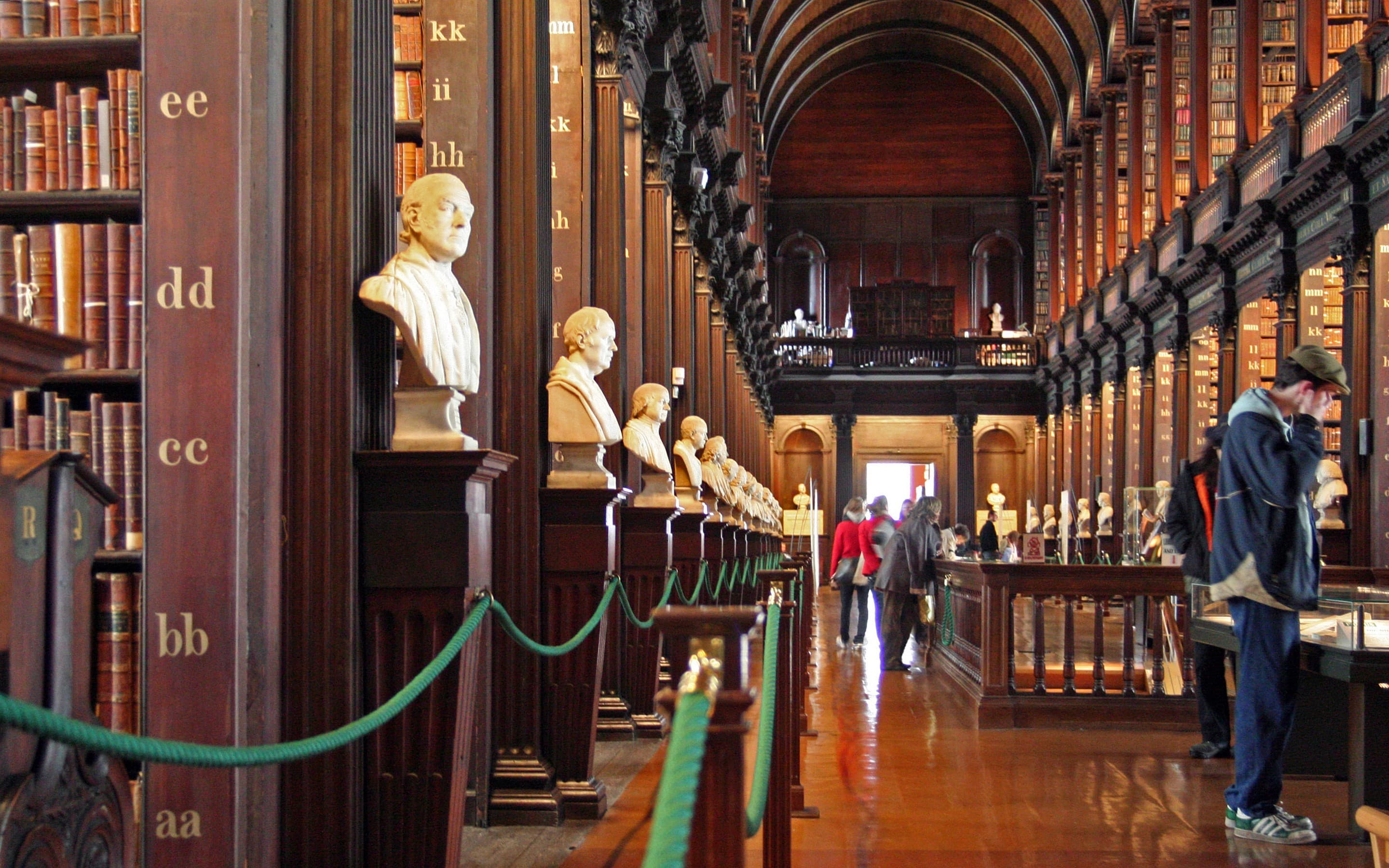
**Trinity College and the Book of Kells** are the classic starting point. The campus is central, photogenic, and easy to combine with Grafton Street, the National Gallery, Merrion Square, and St Stephen's Green. The Long Room has been affected by conservation work in recent years, so check the current visitor experience before assuming every old photo matches what you will see.
**Dublin Castle and Chester Beatty** work well together. Dublin Castle gives political and historical context; Chester Beatty is one of the city's best museums and often punches above its profile. This is a smarter pairing than trying to wander aimlessly until a pub solves the itinerary.
**Kilmainham Gaol** is one of Dublin's strongest history experiences, but it needs advance booking and sits west of the core. Pair it with the Irish Museum of Modern Art, Phoenix Park, or Guinness depending on your day. Do not leave it to chance if it is important.
**Guinness Storehouse** is polished, popular, and commercial, but it delivers what it promises. The view from the top is a real payoff. Pair it with Liberties, Kilmainham, or a west-side day instead of trekking out and back from the centre at random.
**National Gallery, National Museum, and Merrion Square** are good rainy-day anchors and cost-effective ways to make Dublin feel less like a pub crawl with architecture. The National Gallery is especially easy to fit into a first trip.
**St Patrick's Cathedral and Christ Church Cathedral** are both worthwhile, but most short trips do not need every church interior. Pick based on route and interest. Christ Church pairs naturally with Dublin Castle; St Patrick's pairs with the Liberties and a wider south-west walk.
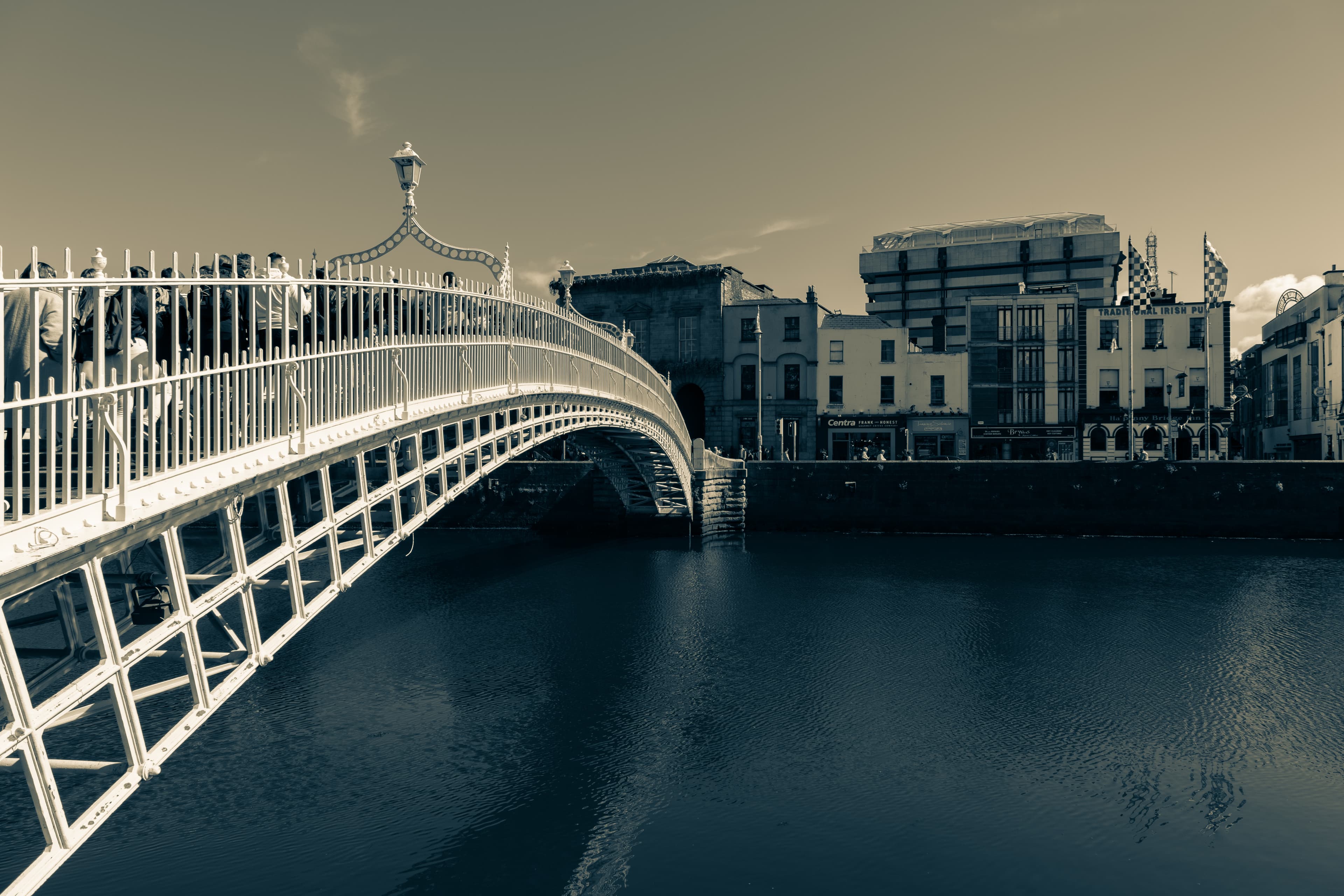
**The Liffey bridges and northside/southside contrast** help orient the city. Cross the Ha'penny Bridge, walk O'Connell Street for context, and then decide whether your next move is history, shopping, food, or a pub. The river is not just scenery; it is the spine of the map.
**A coastal DART trip** is the best add-on if you have time. Howth is popular for harbour walks and seafood, Dalkey and Killiney feel polished and scenic, and Dún Laoghaire is easy for a pier walk. Weather matters. A coastal walk in sideways rain is not a vibe; it is laundry with views.
A simple 3-day Dublin itinerary
A good 3-day Dublin itinerary keeps each day geographically sane. The city is compact, but poor grouping creates wet backtracking, taxi creep, and a strange amount of standing on corners wondering why everything is fifteen minutes away in the wrong direction.
Day 1: Trinity, Georgian Dublin, and the classic centre
Start at Trinity College and the Book of Kells/Long Room experience if you have booked it. Walk toward Grafton Street, St Stephen's Green, Merrion Square, and the National Gallery. This gives you the polished southside version of Dublin first: campus, Georgian streets, art, parks, and shopping.
In the afternoon, cross toward Dublin Castle and Chester Beatty or loop through Temple Bar and the Liffey bridges. Use Temple Bar as a look-around, not necessarily dinner headquarters. For the evening, choose either a proper central pub, a Camden/Portobello dinner, or something around Merrion/Baggot depending on where you are staying.
Day 2: Kilmainham, Guinness, Liberties, and the west side
Use the morning for Kilmainham Gaol if you secured tickets. Pair it with IMMA or Phoenix Park if you want more history/green space. Then move toward Guinness Storehouse or the Liberties. This is the day where a taxi or bus can be sensible because the west-side sights are not as tightly walkable as the central core.
If Guinness is not your thing, spend more time at Phoenix Park, the museums, or Stoneybatter/Smithfield. In the evening, aim for Smithfield, Stoneybatter, Camden Street, or a booked restaurant rather than drifting back into the busiest tourist blocks because decision fatigue won.
Day 3: Coast, northside, or a deeper city day
If the weather is decent, take the DART to Howth, Dalkey, Dún Laoghaire, or Killiney. This gives the trip breathing room and reminds you Dublin is a coastal city, not just a tight centre with expensive pints.
If the weather is poor, stay in the city and build a museum/pub/café day: National Museum, Hugh Lane Gallery, EPIC, the General Post Office area, or a literary/history walk. Finish with one good pub or live-music plan, ideally not chosen by following the loudest group on the sidewalk.
Safety, money, and practical tips
Dublin is generally safe for first-time visitors, but it is still a real city with nightlife, pickpocket risk, visible social problems in some central areas, and occasional rowdiness around pub-heavy zones. Use normal city awareness rather than fear.
Keep phones and bags secure around Temple Bar, Grafton Street, O'Connell Street, busy buses, and nightlife areas. Late at night, stick to well-used streets, take a taxi if the route feels awkward, and do not turn "saving ten euros" into a walking tour of poor judgment.
Cards are widely accepted, but keep a small amount of cash for tips, small pubs, markets, lockers, or the odd place that still operates like card machines are a philosophical threat. Tipping is more modest than in North America. Round up, leave around 10 percent for good table service, and do not overthink every pint.
Book ahead for Kilmainham Gaol, Guinness Storehouse, Trinity/Book of Kells, popular restaurants, and event weekends. Dublin is not huge; when something sells out, the replacement option is often less convenient or more expensive.
Pack a rain shell and comfortable shoes. Umbrellas can work, but wind often treats them as disposable performance art. Layers matter more than heavy coats for most of the year.
If you plan day trips, separate easy rail trips from long bus tours. Howth, Dalkey, Malahide, and Dún Laoghaire are simple. Cliffs of Moher from Dublin is possible but long. Glendalough/Wicklow is more manageable as a day tour. Belfast is feasible by train for some travelers, but it deserves more than being used as a checkbox if you can spare the time.
How to time your Dublin trip for better value
Dublin value is mostly about hotels. Flights can be reasonable, attractions are manageable, and pubs are predictable enough, but accommodation can make the whole trip feel like the city is charging rent by the emotion.
For better value, compare weekdays against weekends, avoid major events, and look just outside the most obvious centre. Portobello, Smithfield, Stoneybatter, Docklands, and transit-friendly southside areas can beat paying a premium for Temple Bar noise. If you find a good central hotel at a fair price, book it early; Dublin does not always reward waiting.
May, June, September, and early October are worth booking early because they are genuinely good months. March around St Patrick's Day needs even more lead time. January, February, and some November dates can be better value if you accept shorter days and wetter weather.
Think carefully before using Dublin as a long base for the whole of Ireland. It works for nearby trips, but the west coast, Galway, Kerry, Cork, and Donegal are not "just pop over" places unless your hobby is sitting on transport while beautiful country exists elsewhere. For a broader Ireland trip, spend 2 or 3 nights in Dublin, then move on.
> **Quick answer block:** For better Dublin value, travel in shoulder season, compare weekday hotel rates, stay near useful transit rather than inside Temple Bar, and book early for March, summer, and major event weekends.
FAQ
How many days do you need in Dublin for a first visit?
Most first-time visitors need 2 to 3 full days in Dublin. Two days covers the central highlights and one major booked attraction. Three days gives you time for Kilmainham, Guinness, Phoenix Park, or a coastal DART trip without rushing.
What is the best area to stay in Dublin for first-timers?
St Stephen's Green, Merrion Square, Trinity/Grafton Street, and Portobello are the best southside bases for most first-timers. Smithfield is a practical value option with Luas access. Temple Bar is convenient for nightlife but often noisy and overpriced for sleeping.
Is Dublin expensive?
Yes, Dublin can be expensive, especially hotels and drinks in central tourist zones. You can control costs by booking accommodation early, staying just outside the loudest core, using public transport, and eating some meals in neighbourhoods rather than beside major attractions.
Is Dublin easy to get around without a car?
Yes. Central Dublin is walkable, and Luas, buses, DART, taxis, and airport coaches cover most visitor needs. A rental car is unnecessary inside the city and usually creates more hassle than convenience.
Is Temple Bar worth visiting?
Temple Bar is worth seeing once because it is famous, central, and lively. It is not the best measure of Dublin pub culture and is rarely the best place to stay. Use it as a stop, then look to other neighbourhoods for better evenings.
Let Fare Window find the best fares for your next trip.
Track routes, watch price changes, and get smarter alerts before you book.
Start tracking faresKeep planning
Related travel guides
Explore more first-time destination guides while you compare routes, seasons, and trip shapes.