Lagos Travel Guide for First-Time Visitors
Plan a first Lagos trip with practical advice on areas to stay, traffic, food, things to do, safety, timing, and a realistic 3-day itinerary.
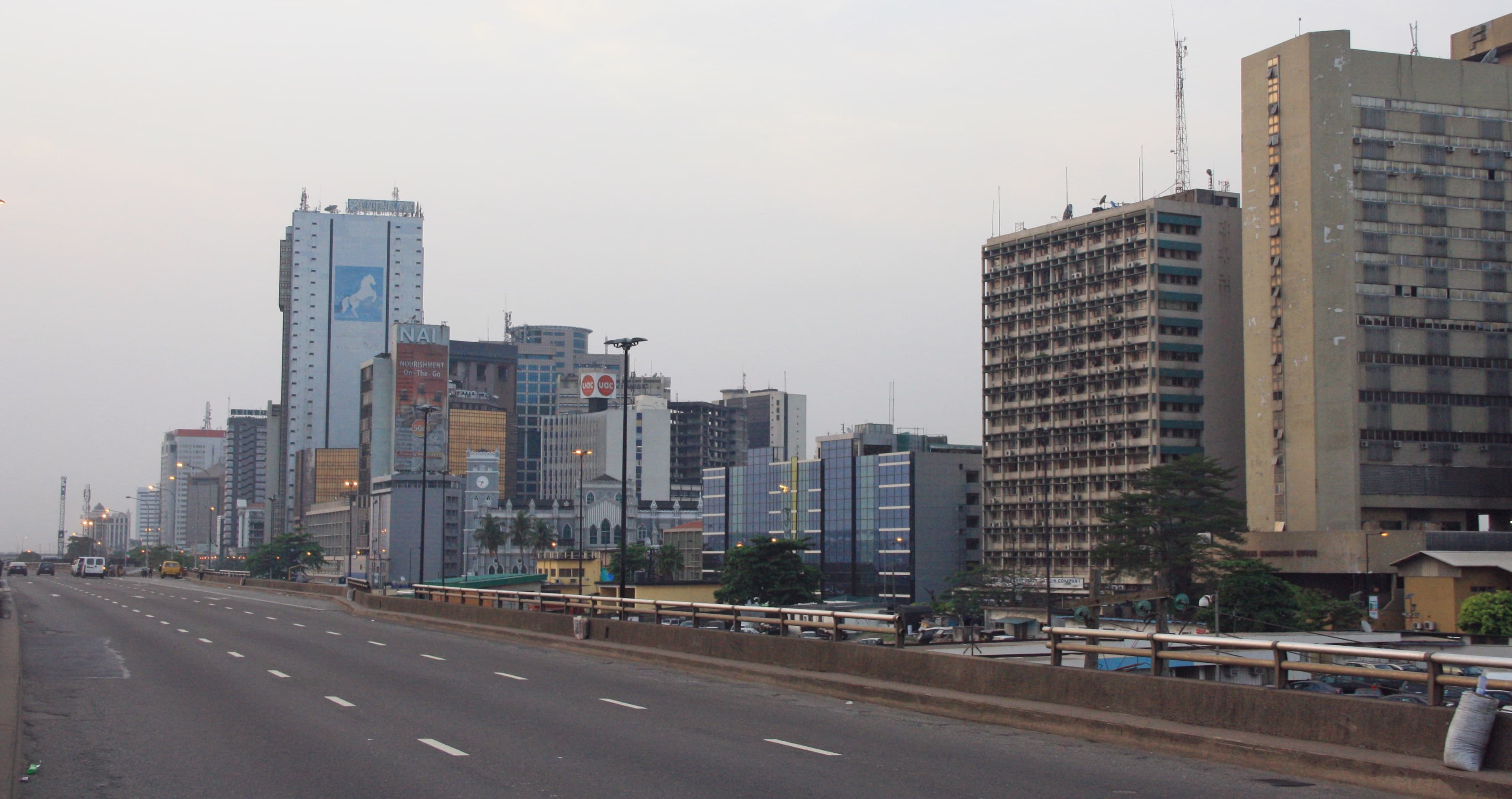
Lagos is thrilling when you plan it as a chain of distinct zones and exhausting when you treat it like a normal compact city break. The best first visit is not a heroic attempt to cross the metropolis five times a day. It is a carefully based trip with room for traffic, art, food, nightlife, and one or two places where the Atlantic or lagoon lets the city breathe.
That is the useful premise of this Lagos travel guide: stay close to the version of Lagos you actually want, group each day geographically, and spend money on reliable movement before wasting it on a cheaper hotel in the wrong area. Lagos rewards curiosity, but it has no interest in making your logistics easy.
_Lagos makes more sense as connected islands and mainland districts than as one sightseeing centre._
Quick Facts
- Best first base: Victoria Island for the widest mix of hotels, dining, nightlife, and access to Ikoyi and Lagos Island.
- Best trip length: 3 full days for a first look; 4 days if nightlife, beach time, or a deeper art circuit matters.
- Getting around: Use ride-hailing, hotel cars, or a trusted driver and group every day by zone.
- Best weather window: Usually November to February; December is lively but expensive and traffic-heavy.
- Airport strategy: Consider Ikeja GRA for late arrivals or early departures, otherwise arrange pickup and allow a large buffer.
- Biggest mistake: Booking a cheaper hotel far from the places you actually plan to visit.
Table of Contents
- 1.Is Lagos a good first-time destination?
- 2.Where should first-time visitors stay in Lagos?
- 3.How do you get around Lagos without losing the day?
- 4.What should you actually do in Lagos?
- 5.What and where should you eat in Lagos?
- 6.Is Lagos safe for first-time visitors?
- 7.How many days do you need in Lagos?
- 8.A simple 3-day Lagos itinerary
- 9.When is the best time to visit Lagos?
- 10.Common first-time Lagos mistakes
- 11.Final take
Is Lagos a good first-time destination?
Lagos is a strong first-time destination for travelers who want contemporary African art, Nigerian food, nightlife, fashion, business energy, and a city that feels fully alive rather than arranged for tourists. It is less suitable for anyone expecting a cheap, walkable, low-effort weekend.
> Quick answer: Lagos is worth visiting for its food, creative culture, nightlife, and sheer urban energy, but first-timers should plan transport and neighborhood choice before building a sightseeing list.
The city is intense. Heat and humidity drain energy, traffic rewrites schedules, and ordinary errands can demand more coordination than the map suggests. The payoff is a place with a strong sense of itself: galleries that do not feel imported, restaurants with real local ambition, social life that runs late, and neighborhoods that change character sharply across bridges and bottlenecks.
If you prefer museums and landmarks delivered in a neat historic centre, Lagos can feel resistant. If you like cities where the main attraction is the city itself, it can be one of West Africa's most memorable stops.
Where should first-time visitors stay in Lagos?
Victoria Island is the best all-round base for most first-time visitors because it balances hotels, restaurants, nightlife, business districts, and access to Ikoyi and Lagos Island. Ikoyi is calmer and more polished; Lekki Phase 1 has younger food-and-nightlife energy; Ikeja GRA is the practical choice for airport-heavy or mainland-focused trips.
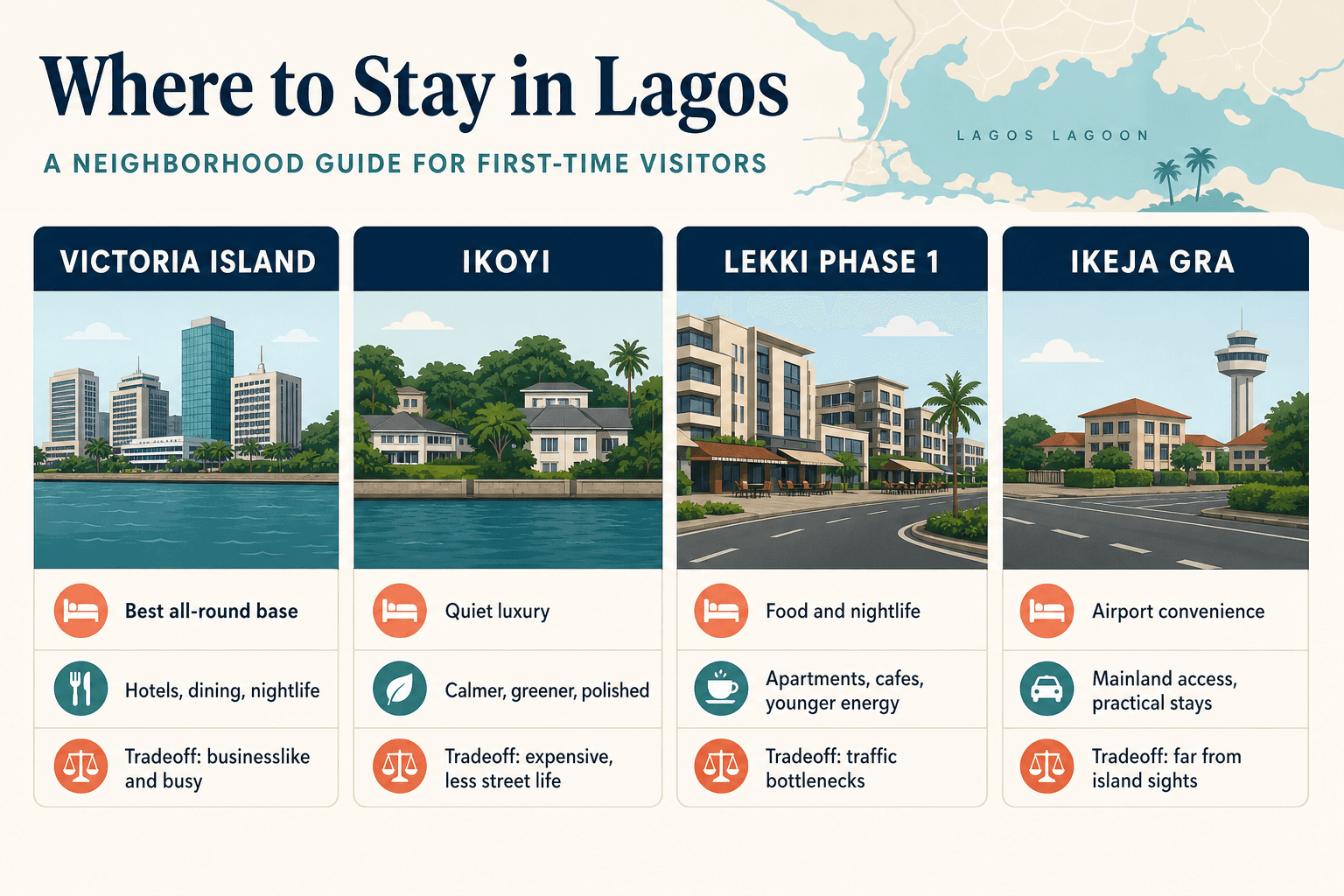
_There is no universally best Lagos neighborhood. Choose the base that removes the most friction from your real itinerary._
Victoria Island: the easiest first base
Victoria Island, usually shortened to VI, is the safest default recommendation for a leisure traveler who wants a full Lagos weekend. It has broad hotel choice, excellent restaurants, bars, clubs, corporate landmarks, and relatively practical access to Ikoyi, Oniru, Lagos Island, and the start of the Lekki corridor.
The tradeoff is atmosphere. Parts of VI feel corporate, traffic is still serious, and the district is not a walkable resort island. Stay here because it simplifies evenings and gives you options, not because it promises postcard charm.
Ikoyi: quieter, greener, and expensive
Ikoyi suits travelers who value calm hotels, polished restaurants, security, and a more residential setting. It can be an excellent choice for a higher-budget trip or for someone who wants to retreat from Lagos between outings.
You pay for that calm. Ikoyi has less street-level energy, accommodation can be expensive, and you will still use a car for most plans. It is a comfortable base, not a shortcut around Lagos logistics.
Lekki Phase 1: dining, apartments, and nightlife
Lekki Phase 1 works well for travelers prioritizing restaurants, bars, serviced apartments, beach-club plans, and the younger creative side of the city. It also puts you closer to Nike Art Gallery and farther down the peninsula toward Lekki Conservation Centre.
The catch is the Lekki-Epe corridor. Traffic bottlenecks can turn a good location on paper into a daily negotiation. Do not book deep into Lekki because the apartment is stylish if half your plans are back in VI or Lagos Island.
Ikeja GRA: airport convenience with a mainland tradeoff
Ikeja GRA is the sensible answer for a late arrival, an early flight, business around the mainland, or a very short stop. It has reputable hotels and restaurants and avoids starting every airport transfer from the islands.
It is not the best base for an island-heavy leisure itinerary. Saving time on arrival means spending it later if your days revolve around VI, Ikoyi, Lekki, and Lagos Island.
How do you get around Lagos without losing the day?
Most first-time visitors should use reputable ride-hailing apps, hotel cars, or a trusted driver and organize each day by area. Public buses, danfos, rail, and ferries are important parts of Lagos life, but they are not automatically the simplest tools for a newcomer carrying a phone, bag, and fixed reservations.
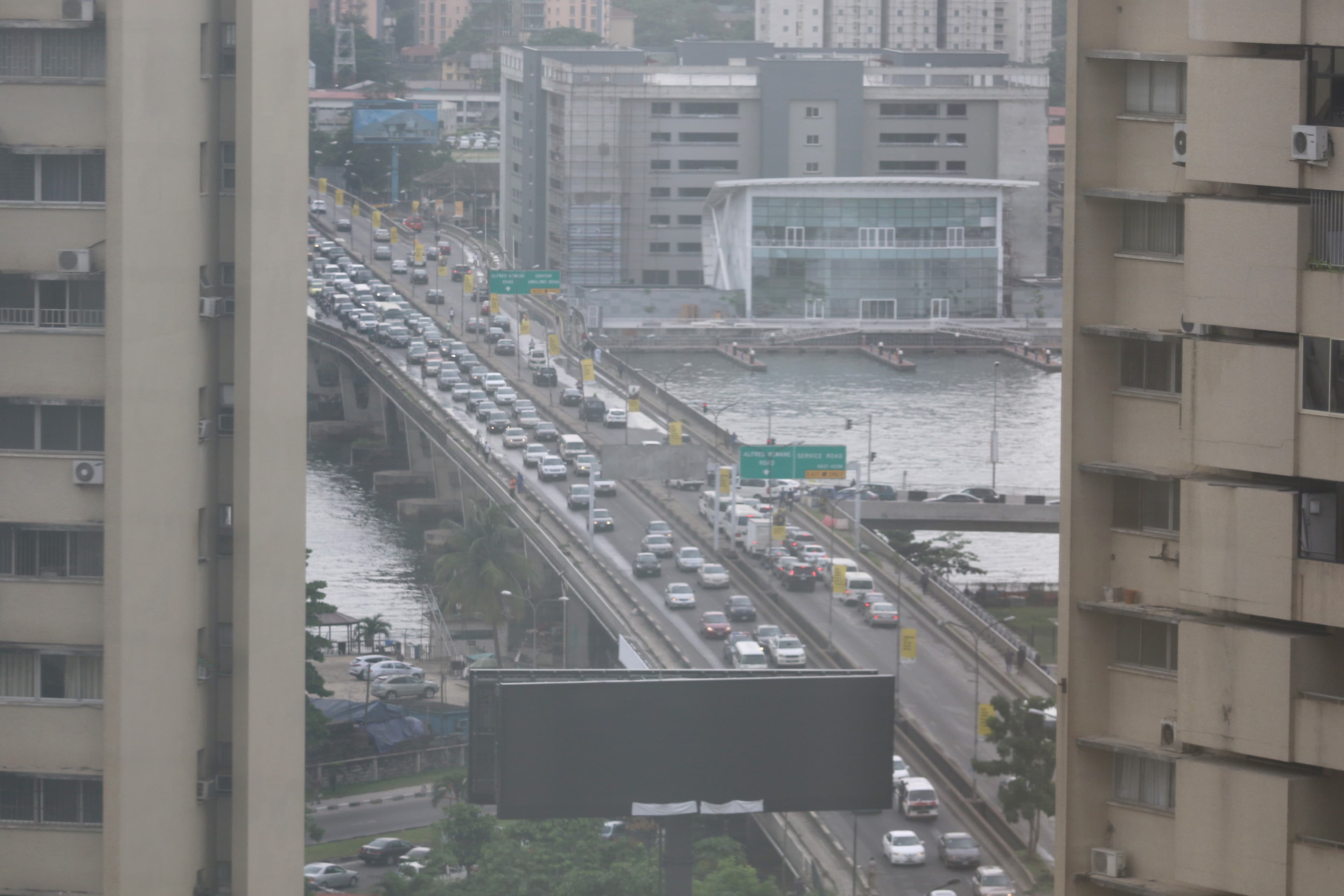
_Traffic is not a minor inconvenience in Lagos; it is part of the itinerary math._
Uber and Bolt are common starting points, but pickup quality, vehicle condition, payment expectations, and availability can vary. Confirm the car and driver in the app, keep a working local data connection, and have a backup plan for airport transfers or time-sensitive bookings. A vetted driver costs more but can be worth it for a full day with multiple stops.
The winning strategy is geographic clustering. Pair Lagos Island with Freedom Park or a guided market visit. Pair Nike Art Gallery with Lekki or VI plans. Put Lekki Conservation Centre on a Lekki-focused morning. Do not book a morning in Ikeja, lunch in Lekki, sunset on Lagos Island, and dinner back in VI unless the point of the trip is studying upholstery.
Use official or reputable operators if you take a ferry or water taxi, and follow local safety instructions. For Murtala Muhammed International Airport, build a generous buffer and arrange pickup in advance. “It is only 30 kilometres” is the opening line of many bad Lagos stories.
> Quick answer: Ride-hailing works for flexible trips, but a trusted driver is often better for a multi-stop day. Group plans by island, peninsula, or mainland rather than by what looks nearby on a map.
What should you actually do in Lagos?
The best first Lagos itinerary combines one serious art stop, one coastal or nature break, one piece of Lagos Island history, and enough unstructured food or nightlife time to experience the city beyond its attractions.
Start with the art, not a generic landmark checklist
Nike Art Gallery is the most useful first stop for understanding Lagos as a creative capital. Its dense collection of Nigerian art, textiles, sculpture, and craft gives the trip context quickly. Go with time to look rather than treating it as a photo stop.

_Nike Art Gallery works best as an introduction to Nigerian visual culture, not as a quick backdrop between car rides._
If contemporary art is a priority, check current exhibitions at smaller galleries in VI, Ikoyi, and Lagos Island before the trip. Schedules change, and that changing calendar is more interesting than a permanent “top ten” list copied until the internet collapses under its own laziness.
Use Lagos Island for history—with local guidance where useful
Freedom Park, built on the site of the former colonial prison, offers a manageable historical anchor and sometimes hosts cultural events. Nearby Lagos Island is dense, commercial, and layered. It is not an area to wander blindly with your phone out while hoping a walking-tour aesthetic materializes.
For Balogun Market or deeper market exploration, go with someone who knows the area and confirm conditions locally. The goal is to experience commerce and street life without turning yourself into a confused obstacle.
Make room for nature at Lekki Conservation Centre
Lekki Conservation Centre is the clearest antidote to traffic and concrete, with wetlands, forest, wildlife, and its canopy walkway. Go earlier for cooler conditions and fewer people, wear shoes that can handle uneven or damp surfaces, and check current opening and canopy access before leaving.
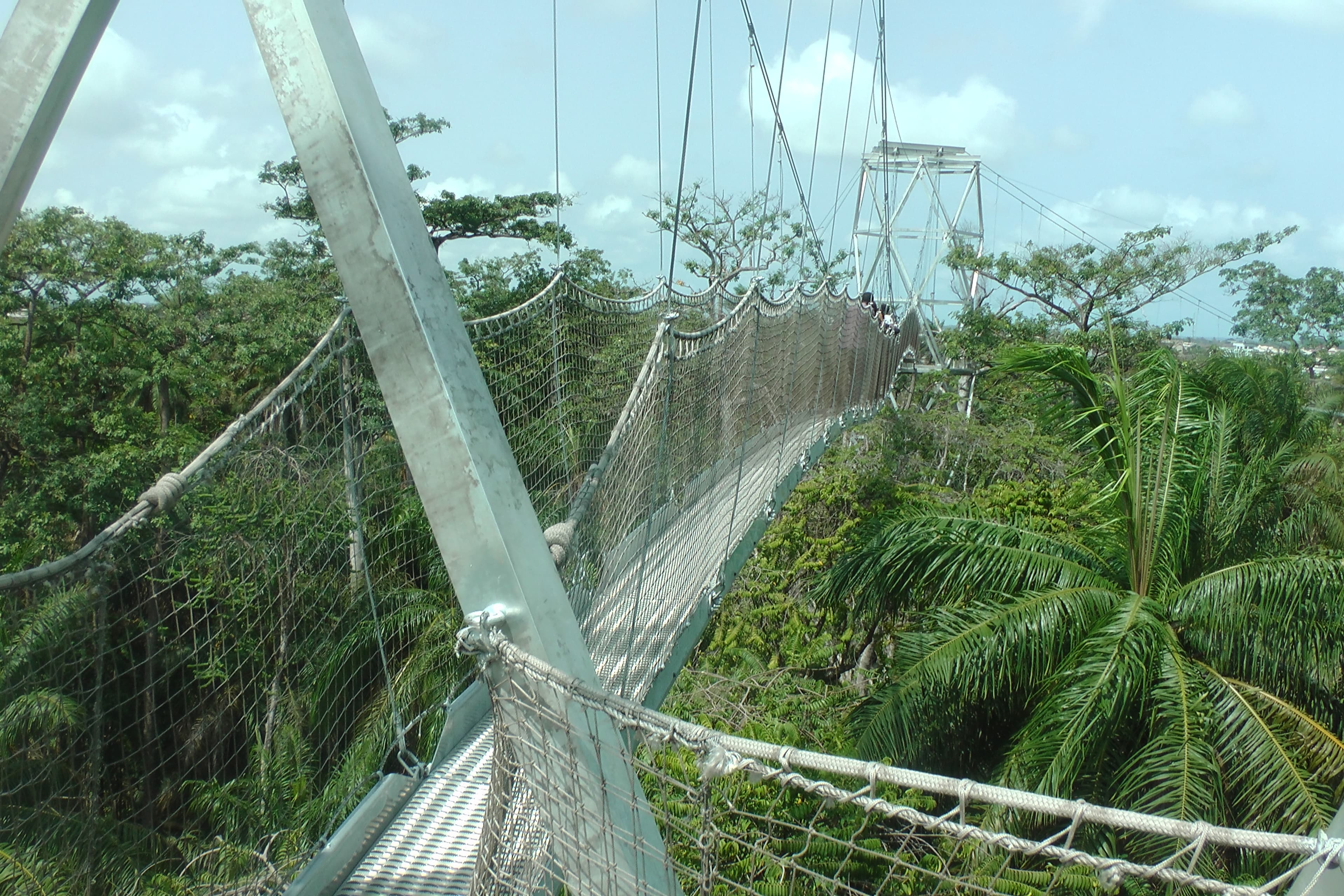
_The conservation centre is worth the drive when it anchors a Lekki day; crossing the city solely for a rushed hour is poor planning._
Beach time is more complicated than simply choosing the closest strip of sand. Access, crowds, facilities, water conditions, and transport differ. Tarkwa Bay involves a boat journey; private beach clubs farther along the coast can be easier but expensive and time-consuming. Pick a beach day for the atmosphere, not because Lagos is secretly a low-effort swimming resort.
What and where should you eat in Lagos?
Eat by neighborhood and by purpose: one excellent Nigerian meal, one casual local favorite, one ambitious contemporary dinner, and street food only where the turnover and hygiene look convincing. Lagos has too much range to waste the trip chasing a single viral restaurant across traffic.
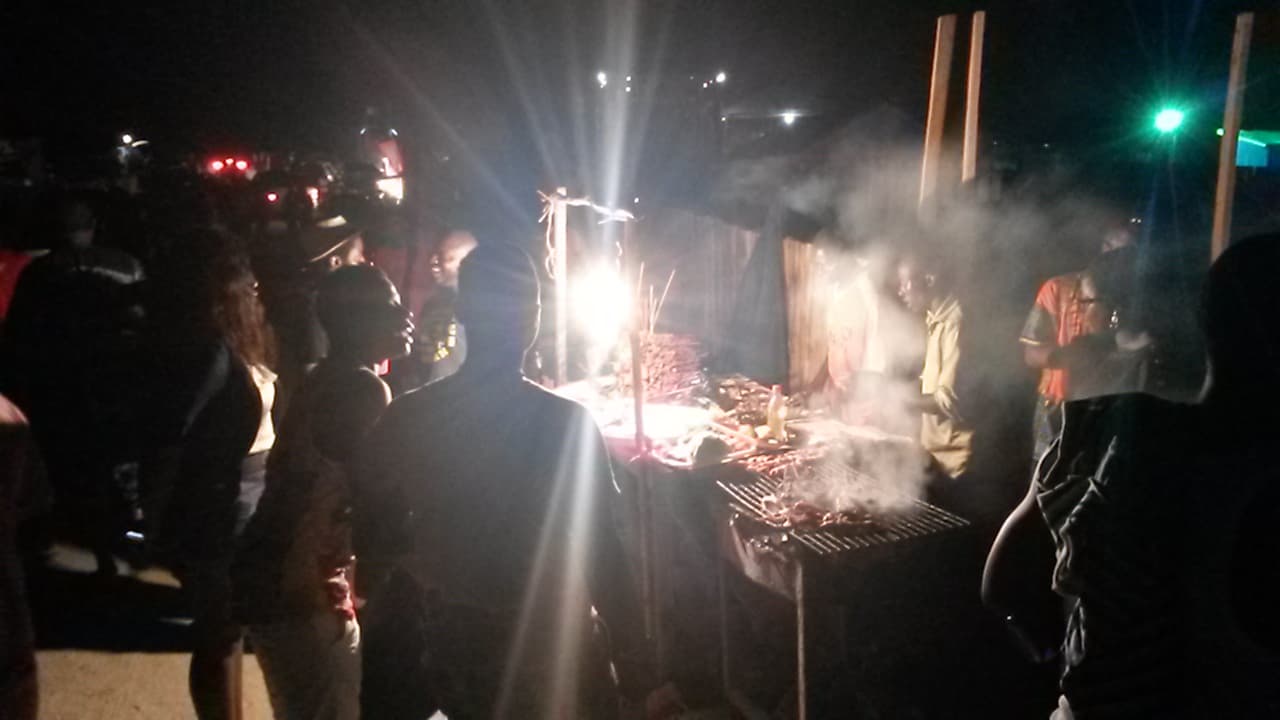
_Suya is one of Lagos's great late-day pleasures; choose a busy vendor and let freshness beat internet fame._
Look for jollof rice, smoky party rice, suya, pepper soup, grilled fish, moi moi, akara, ewa agoyin, pounded yam with soup, and seafood where the kitchen handles it confidently. Nigerian food can be spicy, but heat varies. Ask instead of performing bravery for an audience that did not request it.
VI and Ikoyi are strongest for polished dining and business-friendly restaurants. Lekki Phase 1 has broad casual dining, nightlife, cafes, and newer concepts. Mainland neighborhoods can offer excellent local food but make more sense when they fit the day's route or you have a trusted recommendation.
Card payments are widespread at established venues, but terminals and connectivity can fail. Carry a modest amount of naira without displaying it, and do not assume every small vendor accepts foreign cards. Also leave more time for dinner than the reservation itself: arriving is part of the meal plan in Lagos.
> Quick answer: Build meals around where you already are. A merely good dinner ten minutes from the hotel often beats a famous one reached after two hours of traffic and spiritual decline.
Is Lagos safe for first-time visitors?
Lagos requires more planning and situational awareness than an easy tourist city, but many visitors travel successfully by using reliable transport, choosing accommodation carefully, avoiding conspicuous valuables, and getting current local advice. Safety conditions differ sharply by district and time of day.
Do not walk unfamiliar routes at night because they look short on a map. Keep phones controlled near roads and open car windows, use ATMs in secure locations, and avoid displaying jewelry or large amounts of cash. Confirm ride details before entering a vehicle. Ask your hotel or host about the specific area you are visiting rather than treating “Lagos” as one uniform risk category.
Official travel advisories for Nigeria can be strict and conditions change, so check your government's current guidance and insurance coverage before booking. Entry and visa rules also change: verify the current Nigerian immigration process directly, not through an old blog post. Carry yellow-fever documentation if required for your itinerary and discuss malaria prevention and routine travel health with a qualified clinic.
Keep digital copies of key documents, use a local SIM or reliable eSIM, and share plans with someone when heading to unfamiliar areas. The useful mindset is alert and organized, not frightened and improvisational.
How many days do you need in Lagos?
Three full days is the minimum for a satisfying first visit; four days is better if food, nightlife, art, or a beach matters. Two days can work for a focused stopover, but only if you stay close to your priorities and accept that you are sampling the city.
Lagos days are less productive than they look in a notes app. Heat, traffic, late nights, and long meals reduce the number of stops that feel enjoyable. Two major anchors plus dinner is a full day. Anyone promising six cross-city highlights before sunset has either never been or owns a helicopter.
A simple 3-day Lagos itinerary
The best three-day Lagos itinerary keeps each day geographically honest and leaves slack for the city to happen.
Day 1: Victoria Island and Ikoyi
Check in, set up data and payments, and keep the first day near your base. Have lunch in VI or Ikoyi, choose one gallery or waterside stop if energy allows, then make dinner the main event. This is the right night for a polished Nigerian restaurant or a measured introduction to Lagos nightlife—not a cross-city expedition after a long flight.
Day 2: Lagos Island, history, and art
Start earlier for Freedom Park and a planned Lagos Island experience. Use a guide if markets or street photography are central to the day. Move toward Nike Art Gallery later only if traffic and your route make sense; otherwise keep Nike for Day 3 and use the afternoon for another exhibition, cafe, or rest before dinner.
Day 3: Lekki nature and food
Go early to Lekki Conservation Centre, then keep the rest of the day on the Lekki corridor. Add Nike Art Gallery if it was not covered, have a relaxed lunch, and choose either beach-club time or an early return before traffic thickens. Finish with dinner or suya near where you are staying.
If you have a fourth day, use it for Tarkwa Bay or another beach plan, a deeper contemporary-art circuit, or a mainland day around Ikeja. Do not use it to repair three days of bad geography.
When is the best time to visit Lagos?
November through February is usually the easiest weather window, with less rain and somewhat lower humidity, although harmattan haze can affect air quality and visibility. The wetter stretch generally builds from spring into early autumn, with heavy showers and flooding capable of making traffic worse.
December is a special case. “Detty December” brings concerts, parties, diaspora travel, weddings, and enormous energy—but also higher demand, more traffic, and expensive rooms and tables. Go then if events and nightlife are the purpose. Do not go then expecting quiet value.
For lower prices, look outside major holiday and event periods, then check the current calendar before paying. Lagos hotel demand moves with conferences, business travel, weddings, and entertainment events as much as with conventional tourism. A flexible date is useful; a flexible neighborhood is often even more valuable.
Common first-time Lagos mistakes
The biggest mistake is choosing a hotel by nightly price instead of transport cost and time. The second is scheduling attractions from different zones as if bridges were decorative. The third is arriving without working mobile data, reliable airport pickup, or a payment backup.
Other mistakes are subtler: assuming the beach is automatically relaxing, treating local markets as unguided photo sets, planning every night around clubs, or skipping Nigerian art because the city does not package it like a European museum district.
Lagos gets much better when you stop trying to defeat it. Pick the right base, protect your time, follow local advice, and let two good experiences beat six rushed ones.
Final take
Lagos is not the easiest first city in West Africa, and that is part of its appeal. It is a destination for travelers who want ambition, appetite, art, and urban energy—not a frictionless checklist.
Stay in VI for the broadest first-trip convenience, choose Ikoyi for calm, Lekki Phase 1 for food and nightlife, or Ikeja GRA when the airport and mainland matter most. Then build the trip by zones, pay for movement you can trust, and leave blank space in the schedule. Lagos will fill it.
Let Fare Window find the best fares for your next trip.
Track routes, watch price changes, and get smarter alerts before you book.
Start tracking faresKeep planning
Related travel guides
Explore more first-time destination guides while you compare routes, seasons, and trip shapes.