Male Travel Guide for First-Time Visitors
Plan your first Male trip with practical advice on where to stay, Hulhumale vs central Male, getting around, local food, things to do, safety, and a simple itinerary.
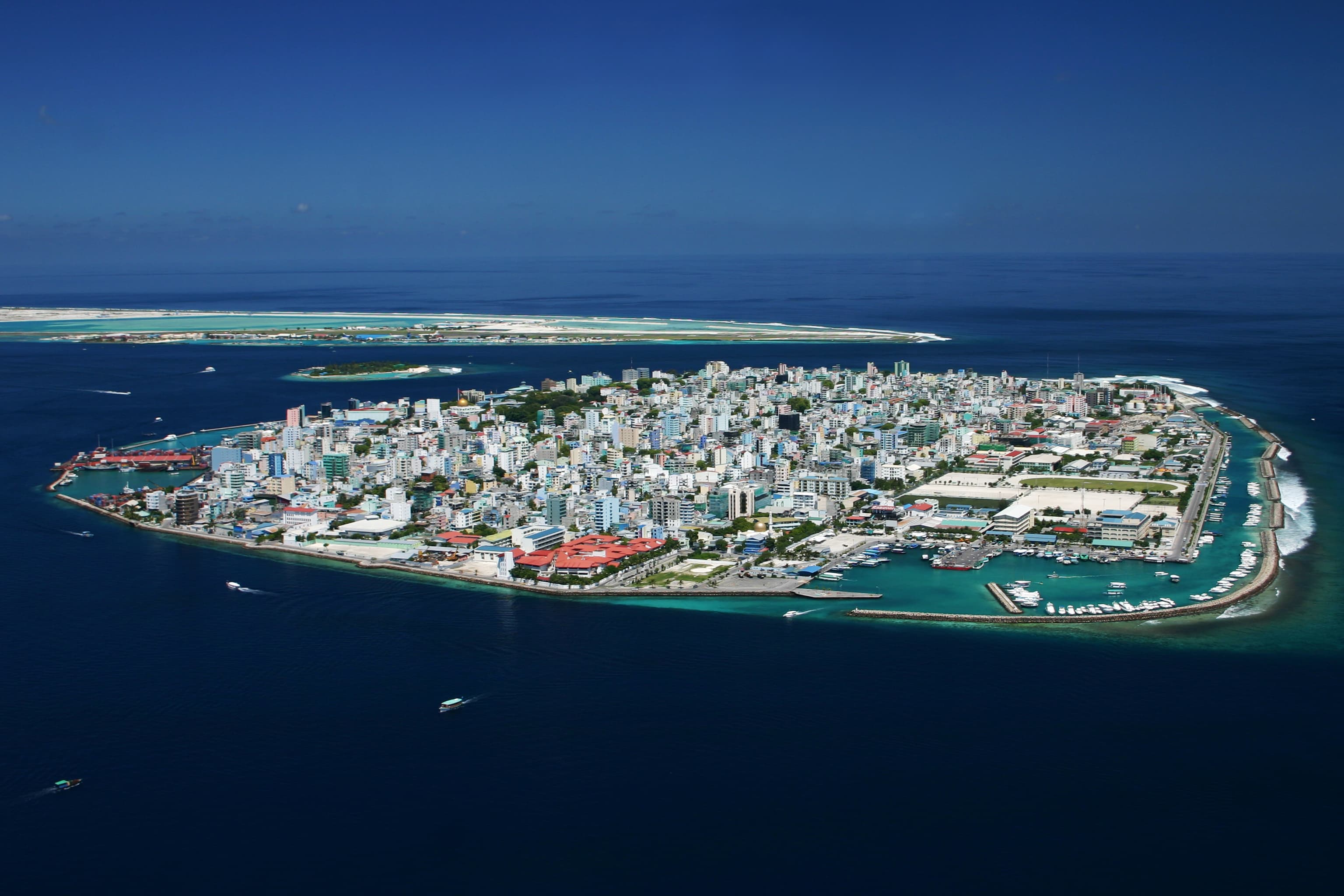
Male is not the Maldives you see in honeymoon ads, and that is exactly why first-time visitors should understand it before they arrive. The capital is dense, loud by island standards, practical, and useful: this is where the airport connection, ferries, banks, government offices, fish market, mosques, cafes, local errands, and a lot of everyday Maldivian life press into a very small island.
For most travelers, Male is best as a **one-day or one-night stop**, not the whole Maldives trip. Stay longer only if you actively want a local city base, need ferry logistics, are using Hulhumale as a cheaper beach-and-airport compromise, or want to see the Maldives beyond resort choreography. The main planning mistake is expecting Male to feel like a resort island. It is a working capital with traffic, apartment blocks, mosque calls, limited beach space, and real local rhythm. That can be interesting. It can also disappoint anyone expecting barefoot fantasy on arrival.
This Male travel guide is for first-time visitors who need the practical version: where to stay, which areas make sense, how to move between the airport, Male, Hulhumale, Villingili, resorts, and local islands, what to eat, what to see, and how to build a simple itinerary without turning a Maldives arrival day into a sweaty admin quest.
**Quick answer:** First-time visitors should usually stay in Hulhumale for easy airport access and a calmer beach-adjacent base, central Male for a short city stop near the ferry terminals, or skip an overnight in the capital if a resort or local-island transfer lines up cleanly. Male itself is worth a focused half-day to see the fish market, local streets, Hukuru Miskiy, Sultan Park/National Museum area, the waterfront, and a proper Maldivian meal.
Quick Facts
Table of Contents
- 1.Is Male worth visiting for first-time travelers?
- 2.Best time to visit Male
- 3.Where to stay in Male and nearby
- 4.Getting around Male without making it harder than it is
- 5.Food and local eating strategy
- 6.Best things to do on a first visit
- 7.A simple first-time Male itinerary
- 8.Safety, dress, money, and practical tips
- 9.How to time Male for better value
Quick facts for first-time visitors
- **Best for:** arrival logistics, a half-day city look, local food, fish market visits, budget overnights before transfers, ferry connections, and travelers curious about everyday Maldives life - **Less ideal for:** resort atmosphere, nightlife, wide beaches, relaxed wandering, luxury romance, and travelers who dislike dense cities - **Best trip length:** 4 to 6 hours for a city look, 1 night for awkward flight/ferry timing, 2 nights only if using Male/Hulhumale as a practical base - **Best areas to stay:** Hulhumale for airport ease and calmer streets, central Male for ferry/market access, airport island hotels for late arrivals only, Villingili for a quieter local-island feel close to the city - **Best time to visit:** December to April for drier weather; May to November can still work but brings more rain risk and occasional transfer disruption - **Getting around:** Walk short central Male routes, use taxis for luggage and heat, use the Sinamale Bridge for airport/Hulhumale road transfers, and use ferries/speedboats/seaplanes for island movement - **Food reality:** Fish, short eats, hedhikaa snacks, roshi, mas huni, curries, tea shops, cafes, and simple local restaurants matter more than resort-style dining - **First-timer mistake:** treating Male as a beach destination instead of a compact capital and transport hub
Table of contents
1. Is Male worth visiting for first-time travelers? 2. Best time to visit Male 3. Where to stay in Male and nearby 4. Getting around Male without making it harder than it is 5. Food and local eating strategy 6. Best things to do on a first visit 7. A simple first-time Male itinerary 8. Safety, dress, money, and practical tips 9. How to time Male for better value
Is Male worth visiting for first-time travelers?
Male is worth visiting if you want to understand the Maldives as a country, not just as a lagoon with breakfast trays. It is the capital, the transport hub, and the place where island fantasy runs into errands, ferries, scooters, offices, schools, markets, and apartment blocks.
That does not mean every traveler needs to sleep there. If your resort transfer is smooth, your flight arrives at a sensible time, and your only goal is water-villa decompression, skip the overnight. Go straight to the island. No one wins a medal for forcing a city stop into a beach trip.
Male is best for travelers with one of four reasons: a late arrival or early departure, a ferry or speedboat connection to a local island, curiosity about local life, or a budget stay before the expensive part of the trip. It is also useful if you want to buy a SIM card, handle cash, eat local food, or reset before moving onward.
The city is compact, but not effortless. Streets are narrow, traffic is busy, sidewalks can be uneven, and heat builds quickly. The right approach is to choose a small cluster of sights and meals rather than wandering aimlessly across the island.
> **Quick answer block:** Male is best as a focused half-day or one-night stop for logistics, local food, markets, and cultural context. It is not the place to look for the classic Maldives resort feeling.
Best time to visit Male
The best time to visit Male is during the drier northeast monsoon, roughly December to April. These months usually give first-time visitors the cleanest arrival window, better walking weather, and fewer weather headaches for speedboat, ferry, or seaplane transfers.
That said, Male is not a destination where season changes the experience as dramatically as it does on a remote beach island. You are mostly dealing with heat, humidity, rain bursts, and transfer reliability. If Male is just an arrival stop, a rainy afternoon is annoying but not trip-ruining. If you are connecting onward by boat, weather matters more.
May to November can still work, especially for better rates, fewer crowds across the Maldives, and flexible travelers. Build in buffer time if you have separate bookings, public ferry plans, or tight same-day transfers. The Maldives is beautiful, but its logistics occasionally enjoy reminding you that the ocean is in charge.
Ramadan can affect opening hours, daytime eating patterns, and local rhythm. It can also make evenings feel lively. If your trip overlaps Ramadan, check current dates and expect a more conservative daytime pattern in Male than at many resorts.
Where to stay in Male and nearby
The best place to stay depends on why you are in the capital area at all. Most first-time visitors should choose between Hulhumale, central Male, an airport-area hotel, or Villingili. Each solves a different problem.
Hulhumale: best for airport access and a calmer first night
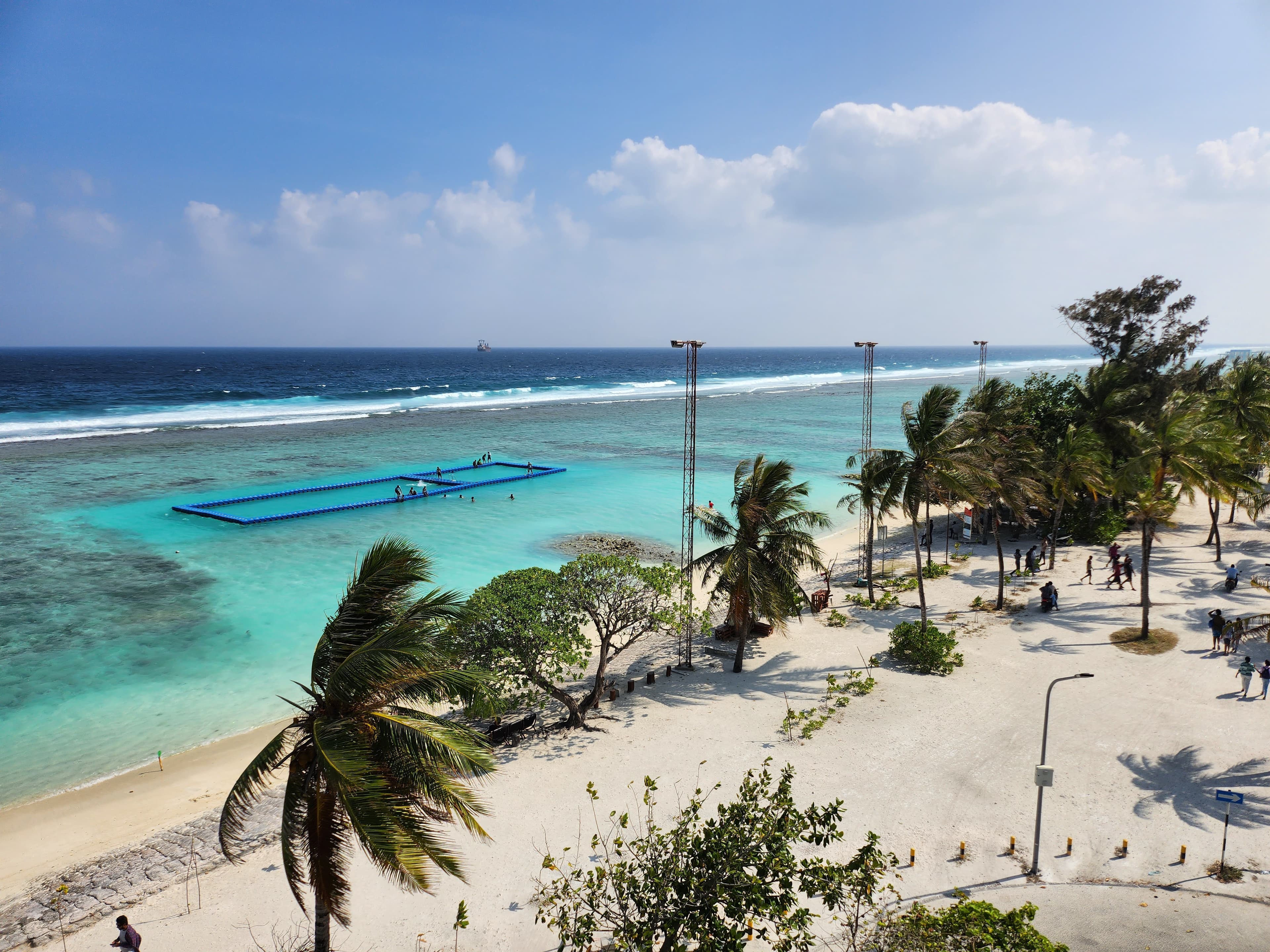
Hulhumale is usually the most practical base for first-time visitors who arrive late, leave early, or need one night before an island transfer. It is connected to the airport and Male by road, has guesthouses and hotels, offers a beach promenade, and feels easier with luggage than central Male.
The tradeoff is atmosphere. Hulhumale is planned and functional, not historic. It is better for sleep, airport logistics, simple beach walks, and cheaper accommodation than for culture. For a first-night reset, that is often perfect.
Central Male: best for ferries, markets, and a real city look
Central Male is best if you want to see the fish market, local shops, mosques, Sultan Park, the waterfront, and ferry terminals without commuting in from Hulhumale. It is the most interesting base for a short cultural stop.
The tradeoff is density. Hotels can be compact, streets are busy, and the city can feel intense after a long flight. Stay here if you actually want the capital, not because a booking site said "Male" and you assumed beach views.
Airport island hotels: best for brutal flight timing
Airport-area hotels make sense when sleep is the only goal. If you arrive near midnight and leave early, save the energy. For anything longer than a transit night, Hulhumale or Male gives you more of a trip.
Villingili: best for a quieter local-island feel close to the capital
Villingili sits just off Male and can work for travelers who want a quieter, more local-feeling overnight while staying close to the capital. It is not a resort island, but it gives you a different pace from central Male.
Use it when your logistics line up and you are comfortable with ferry movement. Do not choose it if your main priority is fastest airport access with luggage.
Getting around Male without making it harder than it is
The best way to get around Male is to keep routes short, use taxis when luggage or heat makes walking annoying, and understand your onward transfer before you book the night. The capital area is small, but the transport system is split between roads, ferries, speedboats, seaplanes, and resort desks.
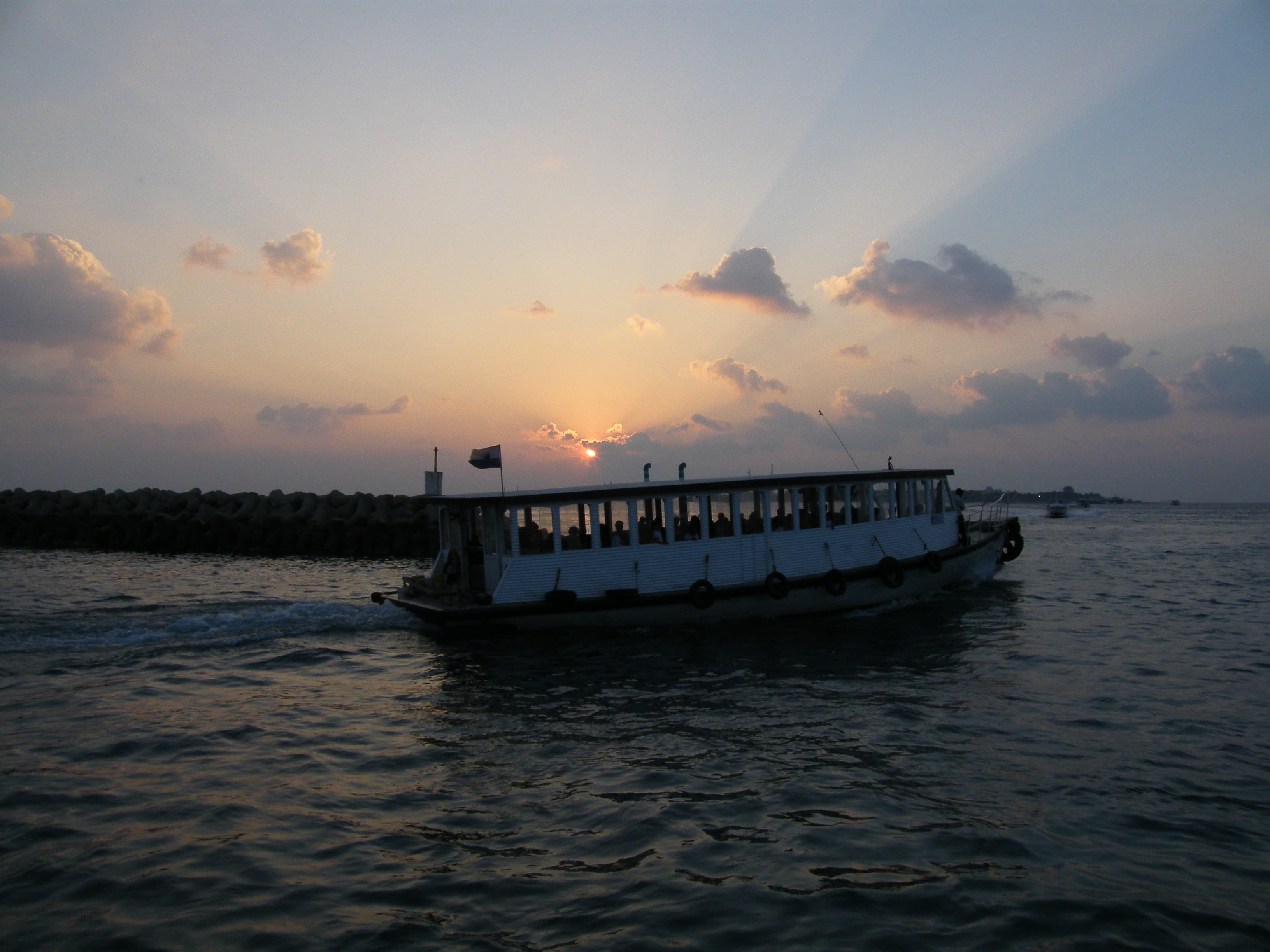
From Velana International Airport, you can reach Hulhumale and Male by road over the Sinamale Bridge. Taxis are the simplest option with luggage. Public buses and airport transfers can work if you are traveling light and know the route, but first arrivals are not the time to prove a point over a few dollars.
Within central Male, many sights are walkable in theory. In practice, heat, scooters, narrow streets, and uneven pavement make short walks better than heroic cross-island marches. Group the fish market, local market, waterfront, Republic Square, Hukuru Miskiy, Sultan Park, and National Museum area together.
For resorts, your transfer is usually arranged through the property and may be by speedboat, domestic flight, or seaplane. Public ferries generally serve inhabited local islands, not private resorts. This distinction matters. A resort transfer is not the same thing as hopping on a cheap ferry because the map shows water.
For local islands such as Maafushi, Thulusdhoo, Dhiffushi, or others in the broader Male atoll area, speedboats are often easier than public ferries for visitors with limited time. Public ferries can be cheap and useful, but schedules, no-service days, weather, and luggage friction make them less forgiving.
> **Quick answer block:** Use Hulhumale or airport taxis for arrival ease, walk only short central Male clusters, and confirm resort or local-island transfer details before booking a capital overnight. Maldives logistics are simple only after you know which kind of boat or plane you actually need.
Food and local eating strategy
The best food strategy in Male is to eat simply and locally: fish, curries, roshi, mas huni, short eats, tea, juices, and casual cafes. Do not judge the capital by resort dining standards. Male's useful food experience is more about everyday Maldivian meals and snacks than polished oceanfront romance.
Start with breakfast if you can. Mas huni with roshi, tea, and a slow cafe morning gives you a better sense of the city than a generic hotel buffet. For snacks, look for hedhikaa: fried or baked short eats often built around tuna, coconut, chili, onion, and dough. They are not glamorous. They are useful, cheap, and exactly the sort of thing first-time visitors miss when they only eat in resorts.
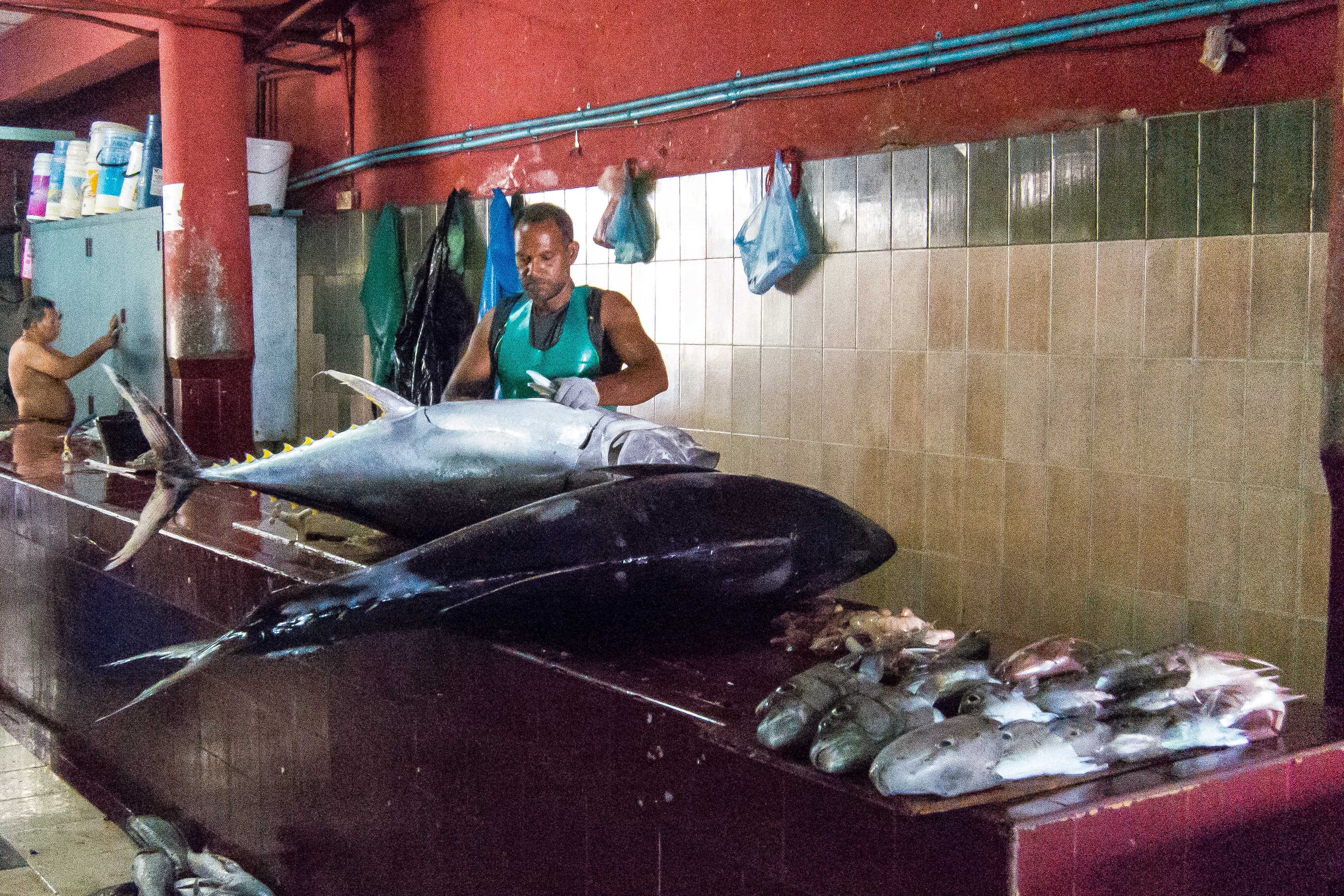
The fish market area is worth visiting even if you do not eat there. Pair it with the local market and waterfront. Go earlier in the day for more activity, but be realistic: this is a working market, not a sanitized food hall.
For dinner, central Male has cafes, local restaurants, Indian/Sri Lankan-influenced options, seafood, and simple international menus. Hulhumale has easier tourist-friendly restaurants and beach-adjacent cafes, especially if you are staying there. Alcohol is not available in regular Male restaurants because the Maldives is a Muslim country; resorts and certain tourist vessels operate under different rules.
If you are sensitive to heat or jet lag, keep the first meal easy. Pick a well-reviewed local restaurant or cafe near your hotel. The goal is not to sprint across Male for the "best" plate of anything while dragging a suitcase and questioning your life choices.
Best things to do on a first visit
The best things to do in Male on a first visit are the fish market, local market, Hukuru Miskiy, Sultan Park and the National Museum area, Republic Square, the waterfront, a short cafe/local-food stop, and an optional Hulhumale or Villingili side trip.
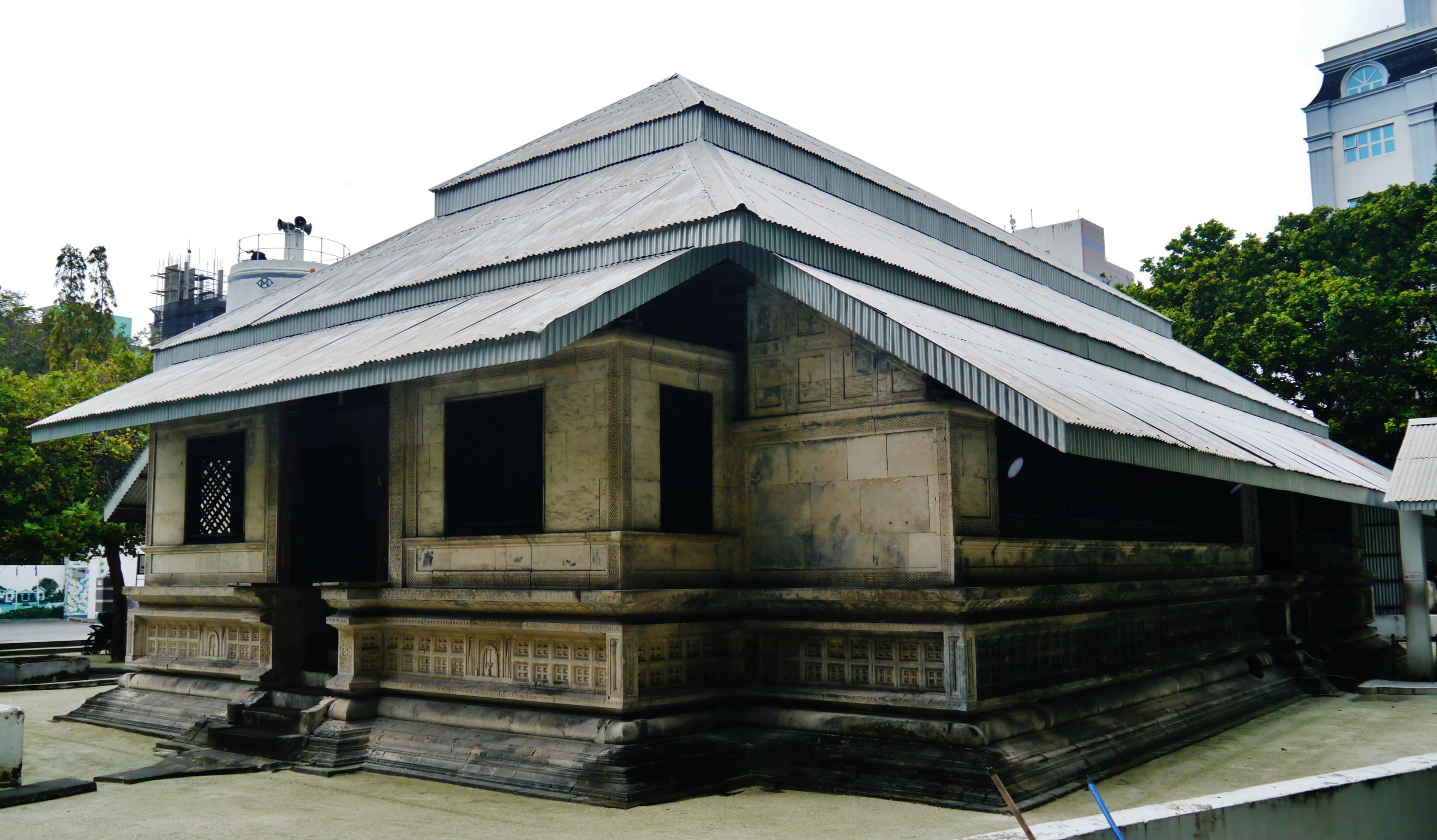
Hukuru Miskiy, also called the Old Friday Mosque, is one of the most important sights in the capital. Its coral-stone architecture, carved details, minaret area, and cemetery give Male a historical layer that is easy to miss if you only see traffic and harborfront buildings. Dress modestly, behave quietly, and check access expectations rather than assuming every interior space is open to casual visitors.
The fish market and local market give you the strongest everyday-city contrast to resort Maldives. The fish market is direct and practical; the local market is useful for produce, coconut, snacks, and island goods. Together they are more revealing than another generic seafront selfie.
Sultan Park and the National Museum area are worth considering if you want history and a calmer pause. The museum is not a mega-attraction, but it helps connect the Maldives to sultanate history, Islam, trade, language, and modern statehood. If you only have a few hours, choose it based on interest, not obligation.
The waterfront and harbor areas help orient the city. Look at how boats, airport movement, ferries, and city density fit together. Male is a water city, but not in the lazy postcard way. It is water as infrastructure.
Hulhumale works as an easy add-on if you are staying there or need a calmer evening. Villingili works if you want a short ferry ride and a quieter local feel. Neither should be crammed in if your Male stop is already short.
A simple first-time Male itinerary
A good first-time Male itinerary depends on how much time you actually have. Do not build a full-day plan if your flight lands at 3:00 p.m., your speedboat leaves the next morning, and your body thinks it is yesterday.
If you have 4 to 6 hours
Base the visit in central Male. Start near the waterfront, visit the fish market and local market, walk toward Republic Square and Hukuru Miskiy, then finish with a cafe or local meal. Use taxis if heat or luggage makes walking irritating.
This is enough time to understand Male without pretending it is a long city break. Store bags if possible. Dragging luggage through narrow streets is one of those travel ideas that sounds fine until gravity gets involved.
If you have one night
Stay in Hulhumale if airport convenience matters most, or central Male if you want the city experience. On arrival day, keep dinner simple. The next morning, do the fish market, local market, Hukuru Miskiy, and waterfront before your onward transfer.
If your transfer leaves early, stay near the airport or Hulhumale and save central Male for a future trip. Missing a speedboat because you wanted one more market photo is a dumb little tragedy.
If you have two nights
Use the first day for central Male: market, mosque, museum area, waterfront, and local food. Use the second for Hulhumale, Villingili, or a nearby local-island/speedboat day depending on your logistics. Two nights can work, but only if you want city and local movement. If your real goal is beaches, move onward.
Safety, dress, money, and practical tips
Male is generally safe for visitors, but it is still a dense capital. Watch bags in busy market areas, use normal street sense, be careful crossing traffic, and do not leave documents or electronics loose while moving between ferries, taxis, and hotels.
Dress more modestly in Male than at a resort. Shoulders and knees covered is a sensible baseline for mosques, markets, local streets, and government/cultural areas. Swimwear belongs on appropriate beaches, boats, or resorts, not in central Male. This is not complicated; people just keep trying to make "local country has local norms" into breaking news.
The Maldives uses the Maldivian rufiyaa, but US dollars are widely used in tourism contexts. In Male, local currency is useful for small purchases, taxis, markets, snacks, and casual restaurants. Cards work in many places, but keep cash as backup.
SIM cards and eSIMs are easy to arrange around the airport or through providers before arrival. If you need reliable data for transfers and messaging hotels, sort this early. Do not rely on patchy free Wi-Fi while trying to find a speedboat rep.
For religion and etiquette, remember that the Maldives is Muslim. Alcohol is not sold in regular Male shops or restaurants. Public behavior is more conservative than at private resorts. During Ramadan, daytime eating and drinking in public may require more discretion, and hours can shift.
For visas, entry rules, and resort/local island transfer requirements, check official Maldives immigration and tourism sources before travel. Most visitors handle entry smoothly, but passport validity, onward bookings, and current advisories are not things to outsource to a three-year-old forum thread.
How to time Male for better value
Male is often where value decisions get made, even if it is not the emotional centre of the trip. A one-night Hulhumale stay can save money when your flight arrives too late for a resort transfer. A central Male stop can make a public ferry or local-island speedboat plan easier. A badly chosen capital overnight can also waste a day and make the Maldives feel harder than it is.
The best value move is to match the overnight to your transfer reality. If your resort speedboat runs late, go direct. If your seaplane only operates by daylight and you arrive after dark, an airport/Hulhumale night may be sensible. If your local-island ferry leaves the next morning from Male, central Male can be practical. If you have kids, heavy luggage, or a honeymoon mood to protect, pay for the simplest transfer pattern you can.
Weather season affects value too. December to April usually costs more across the Maldives because the weather is better. May to November can offer better hotel rates, but rain risk and transfer buffers matter. For Male specifically, shoulder months can be fine because the city is not built around perfect beach lounging.
If you are booking separate hotels, local-island stays, resorts, and transfers, leave more time than the map suggests. The Maldives is geographically small in some ways and logistically picky in others. The water is beautiful. It is also a scheduling system with waves.
> **Quick answer block:** Use Male or Hulhumale when it solves a real travel problem: late arrival, early departure, ferry timing, local food, or a short city look. If it does not solve one of those, go straight to your island and save the capital for a focused stopover.
Male rewards travelers who arrive with the right expectations. It is not the dream-island Maldives, and trying to make it play that role is how people end up annoyed. Treat it as a compact capital, logistics hub, food stop, and cultural counterweight to the resort version of the country. Then it becomes useful, interesting, and much easier to like.
Let Fare Window find the best fares for your next trip.
Track routes, watch price changes, and get smarter alerts before you book.
Start tracking faresKeep planning
Related travel guides
Explore more first-time destination guides while you compare routes, seasons, and trip shapes.